



KPW
Magazine.
KPW
Magazine.










All about trademarks





Digital and AI





Advertising and competition

Creativity and design
Archive
-
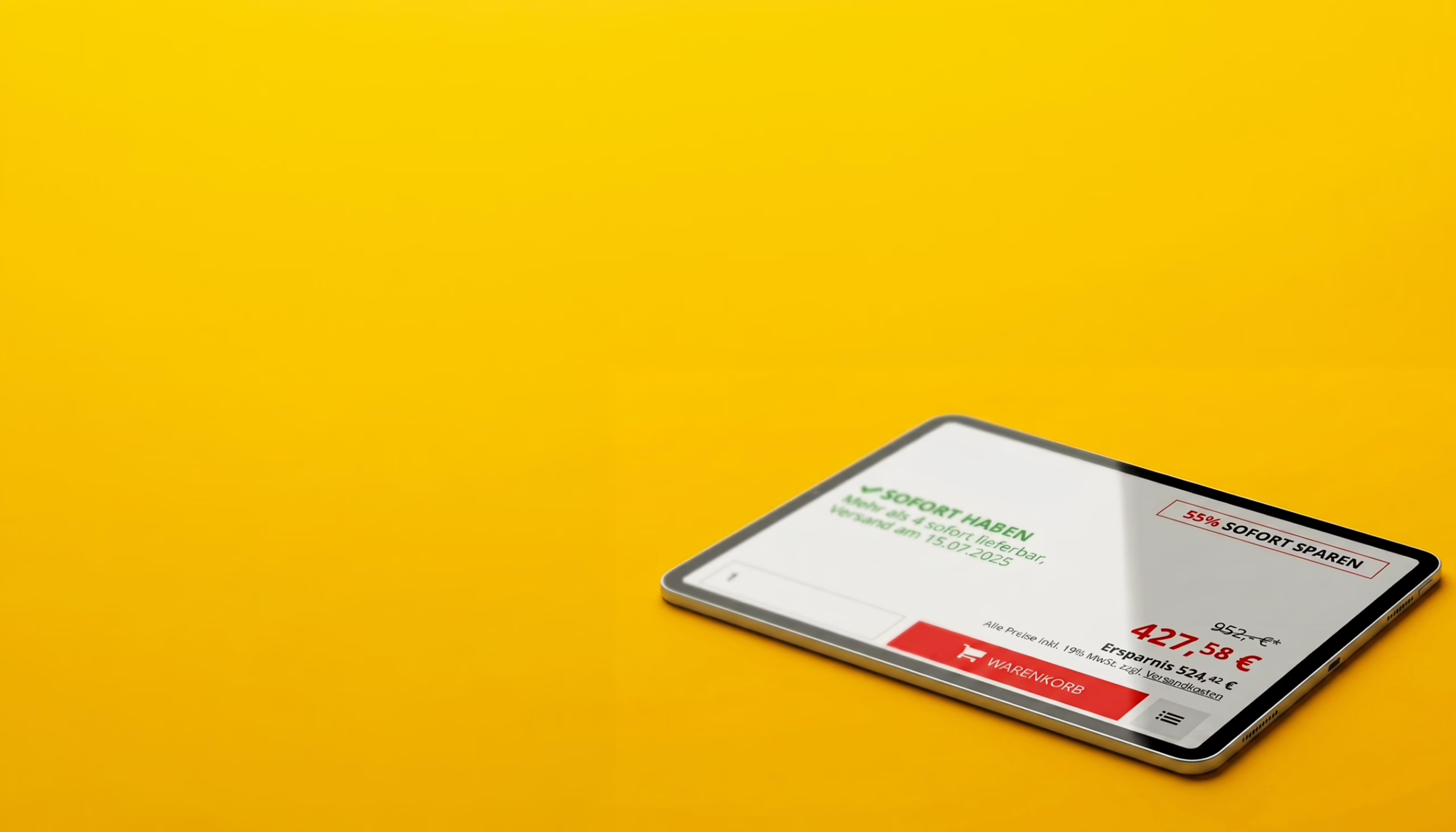
Bargain price turns into a pitfall
The Düsseldorf Regional Court has ruled that promotional prices listed in advertising without a 30-day reference price are misleading and impermissible.
-

No Damages Following Data Breach
The Traunstein Regional Court dismissed a GDPR lawsuit filed in response to a data breach because the plaintiff was unable to prove that he was affected or had suffered any damage.
-

No protection for the compound VARIOPILOT
What’s it about? Eine Anmelderin wollte das Wortzeichen „VARIOPILOT” beim Deutschen Patent- und Markenamt für Steuerungen von Backöfen sowie für Backöfen selbst, jeweils mit Schwerpunkt auf der gewerblichen Bäckerei, eintragen lassen. Die zuständige Markenstelle des DPMA lehnte die Anmeldung am 31.01.2023 ab. Ihrer Ansicht nach fehlt dem Zeichen die notwendige markenrechtliche Unterscheidungskraft. Der angesprochene Fachverkehr…
-

Four 20 Pharma as a trademark is too close to code for cannabis
The Federal Patent Court (BPatG) rejected the trademark application for “Four 20 Pharma” because those skilled in the art understand “420” as a cannabis code and the trademark lacks distinctiveness.
-

Who is liable if Google’s AI lies?
AI-generated summaries on Google can damage a person’s reputation—and Google is liable for them. The Munich I Regional Court has now clarified this.
-

No Break from Cancellation
A gym, a cancel button, and a break A consumer advocacy group filed a lawsuit against a gym operator that offered its members the option to enter into paid contracts for the use of the gyms online. In the footer of the website, the company provided a button labeled “Cancel Contract”—as required by law since…
-
The kitchen stays cold for Wienerwald
The Wienerwald case shows that simply displaying your trademark in a restaurant does not automatically protect the food served there.
-

YouTube’s liability exemption no longer applies
ECJ: Anyone who reviews creator content before sharing revenue loses their hosting privilege. Google is liable for advertisements for contests on YouTube.
-

No trademark for OPENAI
The General Court of the European Union has upheld the rejection of the OPENAI trademark in the EU on the grounds that it is descriptive of software and AI services.
-
Digital Borders for Copyright
ECJ: Effective geoblocking prevents copyright infringement in other EU countries; bypassing it via VPN has no consequences.
-

No whiskey without a wooden barrel
According to the Hamburg Regional Court, the labeling of whiskey aged with wood chips violates EU spirits law and is anti-competitive.
-

Copying Photos with Generative AI
The Frankfurt am Main Regional Court dismisses a lawsuit over AI-edited product photos. The plaintiff failed to prove that a competitor had used its image.
-

Same ASIN, different product
Cologne Higher Regional Court: Anyone who continues to use customer reviews under the same Amazon ASIN after a product change is engaging in misleading and anti-competitive conduct.
-

Puma vs. Tiger Woods
Puma Halts Tiger Woods’ “Sunday Red” in the EU: The EUIPO views the tiger figure as an unfair imitation of the well-known leaping big cat.
-

A wristband without a print is not a medical device
According to the ECJ, unprinted patient wristbands are not medical devices and are therefore not subject to the strict requirements for medical devices.
-

New EUIPO Guidelines
EUIPO will update its guidelines as of July 1, 2026, including changes regarding geographical indications—here is an overview of the most important changes.
-
Zoom vs. Zoom
EUIPO rejects the application for invalidation of the ZOOM trademark. According to the Board of Appeal, a repeated trademark application alone does not constitute bad faith.
-

Negative Entry with Consequences
Federal Court of Justice (BGH) on a negative report to SCHUFA: A disputed claim that has not been plausibly substantiated may not be reported.