

The MAUS
defeats the
Elephant Express.
The MAUS
defeats the
Elephant Express.
from
Can a model train manufacturer simply reproduce and sell a locomotive with a mouse and an elephant on it? When does the argument of fidelity to the original protect – and when does it not?
What is this case about?
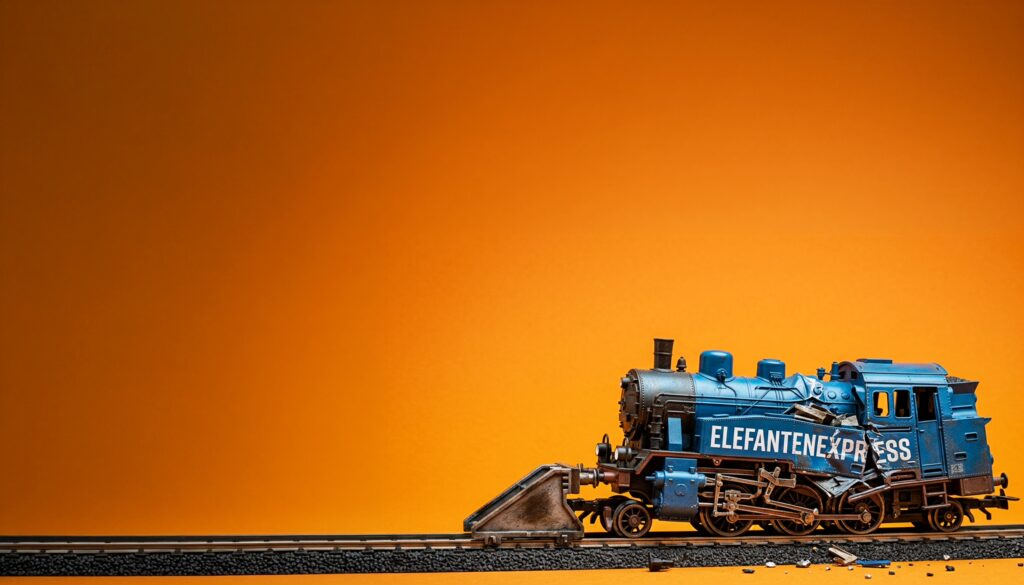
To mark the 50th anniversary of the “blue elephant” from “Die Sendung mit der Maus“, a subsidiary of WDR had a single electric locomotive specially designed in 2025. The class 110 of the railroad company TRI was painted with the elephant motif and the lettering “The Mouse” – it became the so-called “Elephant Express”. The design was based on a license agreement between the WDR subsidiary and TRI.
Without the appropriate permission, a model train manufacturer advertised and offered this exact train for sale a short time later as a scale model replica and even referred to the model itself in its catalog as a “mouse locomotive”.
Why is this problematic in terms of trademark law?
The WDR subsidiary is the owner of the German word mark “Die Maus” and the German figurative mark “Elefant”. Both trademarks are known to the German public primarily from the children’s and family entertainment sector – and this is precisely what is decisive under trademark law. Anyone who uses a well-known trademark in business transactions without the owner’s permission risks an infringement action – even if they do not manufacture identical products. The law protects well-known trademarks even if there is no likelihood of confusion in the narrower sense. It is sufficient for someone to exploit the reputation of a trademark in order to increase the attractiveness of their own product.
What did the court decide?
With its Judgment of 19.03.2026 – Ref. 33 O 400/25 the Cologne Regional Court confirmed a temporary injunction from November 2025 and ruled in favor of WDR. Accordingly, the model train manufacturer may not advertise or offer the replica of the “Elefantenexpress” as long as the “Maus” trademark or the “Elefanten” motif can be seen on it, unless it has the consent of the trademark owner.
The court found that the manufacturer had used the trademarks without permission and thus exploited their reputation. Based on the signs used, buyers would assume that there was a licensing relationship between the parties or that the model had been brought onto the market in collaboration with WDR.
Providing the offered locomotive with the signs “The Mouse” and the “Elephant” increases the attractiveness of the advertised locomotive due to their familiarity and is suitable to ensure a higher demand.
What about the argument of fidelity to the original?
The model maker argued that he had merely reproduced reality. A true-to-scale model must ultimately look like the original, including the printed symbols. In trademark law , it has already been decided several times that the manufacturer of model cars may reproduce the trademark of the vehicle manufacturer, as this trademark can always be seen on the original vehicle.
However, the Cologne Regional Court rejected this settlement. After all, the Elefantenexpress is not an ordinary locomotive that every rail traveler is familiar with. It is a unique special vehicle that was produced on the occasion of an anniversary and is not regularly encountered by the general public in everyday life. The model is therefore not perceived as a simple depiction of reality, but rather deliberately evokes associations with the well-known Mouse trademarks.
In addition, the mouse and the elephant are not manufacturer or company brands of TRI. They were only applied to the locomotive for advertising purposes on the occasion of an anniversary. Unlike the Opel Blitz on a model car, there is therefore no reason why the trademark should necessarily appear on a faithful model.
Conclusion
The judgment makes it clear that although the argument of fidelity to the original has a scope of protection under trademark law, it does not constitute a free pass for every case of faithful reproduction.
The decisive factor is whether the trademarks used are the manufacturer’s trademarks of the reproduced item or whether – as in this case – they are third-party trademarks that were only applied for a special occasion.
We are happy to
advise you about
Trademark law!