


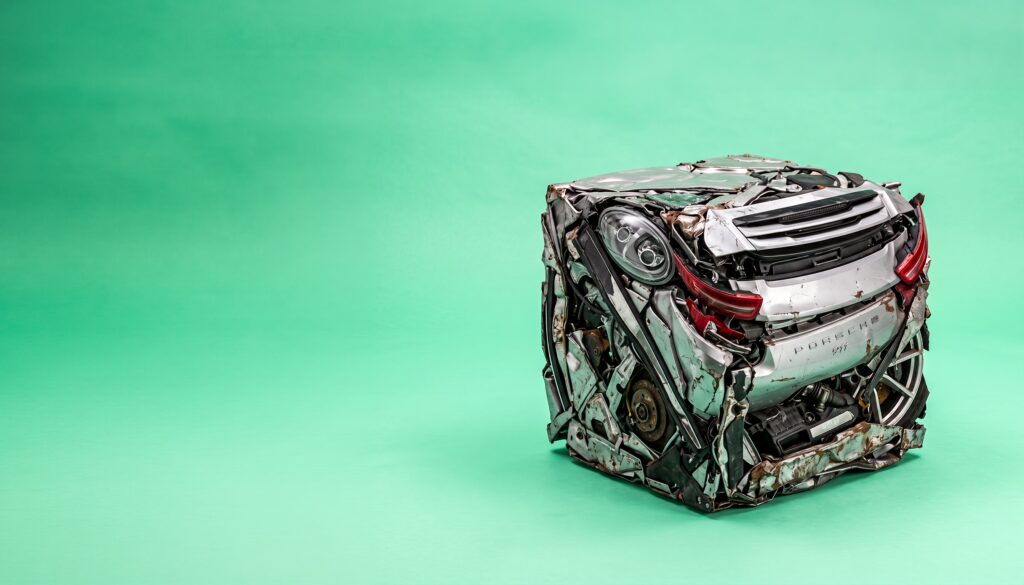
Destroy
instead of just
removing.
Destroy
instead of just
removing.
from
What happens when a dealer keeps selling cars that look like classics from Stuttgart but don’t cost a cent to Porsche? What happens to the vehicles when customs seize them at the border? And is it enough to simply scratch off the brand logos to avoid destruction?
What is it about?
Car dealers imported vehicles from Brazil that were designed as replicas of Porsche classics, in particular the Porsche 550 Spyder and the Porsche 356 Speedster. Several of these vehicles bore openly recognizable trademarks such as the lettering “PORSCHE”, the Porsche crest and the “Spyder” symbol. Customs stopped the vehicles on arrival in Frankfurt after being tipped off by Porsche.
That in itself would have been explosive enough. However, the fact that the defendants had already received cease and desist letters in 2019 and 2022 for similar incidents and had issued cease and desist letters in each case weighed particularly heavily.
Does it help to remove the logos afterwards?
The car dealers had the trademarks removed from the vehicles after the dispute escalated. They argued that the less severe measure had already been implemented and that destroying the vehicles was therefore superfluous. The Frankfurt am Main Higher Regional Court followed this argument in the Judgment of 19.02.2026 – Ref. 6 U 14/25 but not.
The court clarified that the unauthorized removal of the signs did not change the fundamental proportionality test. The decisive factor is whether the destruction is proportionate as a reaction to the overall situation, not whether the signs are still physically present. The removal of the logos essentially only represented the anticipated recourse to the milder means. The court then examined whether this less severe measure was sufficient and answered in the negative. In the case of a repeat offender, mere removal of the logo would destroy the necessary deterrent effect.
If a claim for destruction of the goods is to be affirmed as proportionate in principle, the unauthorized or third-party-initiated removal of the commercial designations cannot create a fait accompli at the factual level that would exclude a claim for destruction.
Why wasn’t the WhatsApp message from the supplier enough?
The car dealers had instructed their Brazilian supplier via WhatsApp to remove all trademarks before shipping. The supplier confirmed this. The car dealers claimed that they had relied on this confirmation.
However, the court did not consider this to be sufficient due diligence. The supplier had initially not followed the instructions, so that repeated follow-up was necessary. This alone considerably diminished the basis for trust. In addition, the supplier did not confirm that it had removed the signs itself, but merely passed on what its employees had allegedly done. The OLG considered this to be mere hearsay. The photos submitted did not help either, as they did not show close-ups of the places where the trademarks are usually attached. The horn button of vehicle no. 3 only appeared as a black spot in the pictures.
The court qualified the managing director’s conduct as grossly negligent. Anyone who has already been sued twice for similar violations must exercise particular care when importing another product and must not rely on vague assurances from third parties.
What happened to the vehicle whose logos had already been removed?
The “Porsche” and “Spyder” lettering had already been removed from one of the vehicles prior to the offer in dispute. On the photos submitted, only dirt marks could be seen in the places where the signs had previously been located. Porsche considered this to be a trademark infringement. The car dealers considered this to be absurd.
The Frankfurt Higher Regional Court ruled in favor of Porsche. A dirt imprint that clearly shows where a trademark was once attached and how easily it could be reattached can be considered trademark-related use in the course of trade. In the case of a used vehicle that has not yet been reconditioned, it is precisely this imprint that is an argument for potential buyers. The vehicle can easily be re-branded with the coveted trademark. The court also pointed out that by sending photos, a permanent representation of this situation was created.
Significance for practice
Anyone importing vehicles or other goods is obliged to ensure that no protected signs are attached to the goods before crossing the border.
The subsequent removal of trademarks does not automatically end the trademark owner’s right to destruction. Repeated infringements in particular may result in the goods having to be destroyed.
Visible dirt marks in places where trademarks were previously located can also be considered trademark-related use if the goods are presented in a business context.
Conclusion
The judgment of the Higher Regional Court of Frankfurt am Main shows that trademark owners have very far-reaching laws in the event of repeated infringements.
Anyone who has issued a cease-and-desist declaration twice and still imports vehicles with brand logos must expect the vehicles to be completely destroyed. Even the subsequent removal of the logos will not help if the court considers this to be too lenient in view of the overall situation.
The decision makes it clear how seriously German courts take the instrument of the destruction claim – especially when deterrence aspects are in the foreground.
We are happy to
advise you about
Trademark law!