


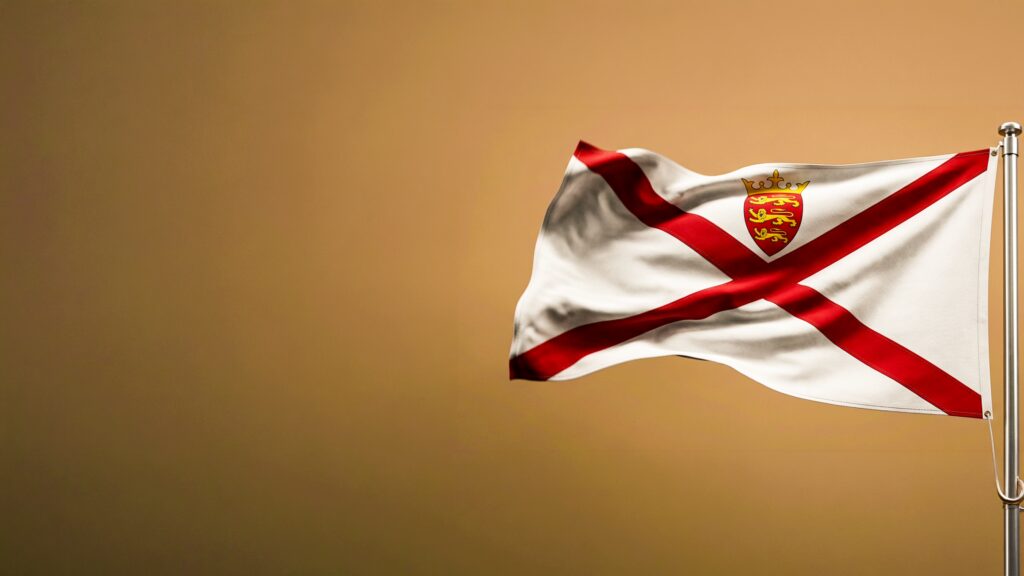
New rules for
trademarks in
Jersey.
New rules for
trademarks in
Jersey.
of
Anyone who has so far protected their trademark in Jersey solely through a designation of the United Kingdom will need to adjust their strategy as of August 1, 2026. As of that date, Jersey will be a separate designation within WIPO’s Madrid System, with its own official fee and its own office of origin.
What Will Change on August 1, 2026
This change affects all companies that have previously relied on designating the United Kingdom in trademark law to also cover the Channel Island of Jersey. Until now, designating the United Kingdom as part of an international registration automatically extended protection to Jersey as well. According to WIPO, this linkage will end on August 1, 2026. As of that date, applicants must specifically designate Jersey as a country of protection in a new international trademark application, a subsequent extension of protection, or when renewing a registration. At the same time, Jersey will establish its own office of origin, the Jersey Registrar of Intellectual Property. Applicants based in Jersey will in the future file their international trademark applications directly through this office.
What applies to existing UK trademarks
For international registrations that already designate the United Kingdom prior to August 1, 2026, different rules apply than for new applications. According to WIPO, there are three distinct categories of cases.
If the UK designation was already protected as of August 1, 2026, WIPO will automatically include a designation for Jersey in the registration without the owner having to take any action. From that point on, the UK designation and the Jersey designation will run independently of one another.
If the examination period for the UK designation had not yet expired as of the cut-off date, WIPO will not register the Jersey designation until the UK Office grants full or partial protection or issues a final decision to that effect.
If the UK designation has already been rejected or declared invalid, a Jersey designation will not be registered.
Holders of existing registrations with a valid UK designation generally do not need to take any action. Anyone who is unsure which of the three categories their registration falls under should have its status checked before the deadline.
Implications for New Trademark Applications
For trademark applications, this means, above all, that Jersey will become an independent country for fee purposes. Until now, Jersey has participated in WIPO’s supplementary fee system and received a share of the fees collected through it. Effective August 1, 2026, Jersey will instead levy its own individual fee. According to the WIPO announcement dated June 24, 2026, this fee for a new international trademark application or a subsequent designation of Jersey is 240 Swiss francs for the first class of goods and services and 64 Swiss francs for each additional class. For the renewal of a registration, the fee is 261 Swiss francs for the first class and 64 Swiss francs for each additional class.
Another new feature is a declaration of use. By designating “Jersey,” the applicant declares that they will use the trademark themselves for the goods and services claimed, or that they will authorize its use with their consent. This declaration will become a standard part of the official forms in the future.
What Companies Should Do Now
Companies interested in trademarks in Jersey should keep three points in mind. For new international trademark applications, Jersey must be specifically designated in the future; a designation limited to the UK is no longer sufficient. And anyone submitting a declaration of use should verify in advance whether their own use or authorized use in Jersey is actually taking place or is planned.
Conclusion
The new regulation follows the logic of trademark law, which holds that Jersey, as a British Crown Dependency, is not part of the United Kingdom under international law but has its own legal system. For holders of existing registrations, little will change in practice; the transition will take place automatically. In practice, the new regulation entails additional administrative and financial burdens, particularly for new applications.
It remains to be seen how strictly the new declaration of use will be enforced in practice and whether a declaration that is later found to be inaccurate will open the door to challenges against the registration.
We are happy to
advise you about
Trademark law!