


Supreme
vs.
Super Me.
Supreme
vs.
Super Me.
of
Can a trademark that the court itself considers weak stop a counterfeiter? And what good is the global fame of a streetwear brand if the sales figures aren’t there? In the dispute over the red box logo, the Federal Patent Court affirmed the likelihood of confusion for clothing but denied it for sex toys.
A red box with letters in the wrong order
On December 13, 2018, a trademark owner filed an application for a word and design mark with the German Patent and Trademark Office (DPMA). It features the white lettering “Super me” on a red rectangle, enclosed by a gray square frame. It was registered on January 14, 2019, for numerous items of clothing, shoes, and headwear, as well as for sex toys.
Anyone familiar with streetwear will recognize the inspiration. The company behind the Supreme trademark uses what is known as a “box logo”—that is, the white lettering “Supreme” inside a red rectangle. On May 14, 2019, it filed an opposition against the new trademark. It based its opposition on an EU trademark and a German trademark featuring this logo. It also cited its corporate name—that is, the name under which it operates in the market.
Contested trademark: Super me

Supreme Opposing Trademark
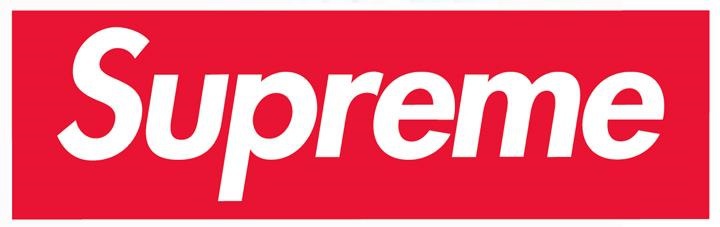
On March 31, 2023, the DPMA rejected the opposition in its entirety. It considered “Supreme” to be descriptive in relation to clothing and deemed the differences between the marks to be sufficient. It dismissed the opposition based on the company name as inadmissible because the required information had been submitted late.
The arguments presented by the parties
Supreme highlighted its history. The company was founded in New York in 1994 as a skateboard brand and is now known worldwide in the streetwear scene. It has been supplying the German market through its online store since at least 2013 and has operated a store in Berlin since November 2021. It cited sales figures only as a minimum amount, the exact figure of which it did not disclose for confidentiality reasons.
Regarding the similarity, Supreme argued that the brain automatically corrects transposed letters. The beginning and end of the words are the same, as are the color and font. This constitutes a deliberate imitation. There is also a risk of confusion regarding sex toys, since Supreme also sells non-fashion items, such as nipple clamps.
The trademark owner did not submit any comments during the appeal proceedings. Before the DPMA, the owner had argued that “Supreme” was a common English adjective not eligible for protection. “Super me,” on the other hand, was a coined term that differed significantly in both the number of syllables and its sound.
Federal Patent Court Cancels “Super me” for Clothing
In its decision dated September 21, 2026—Case No. 29 W (pat) 18/23— the Federal Patent Court partially overturned the DPMA’s decision. It ordered the cancellation of the trademark for all goods in Class 25, i.e., clothing, footwear, and headgear. It dismissed the appeal regarding sex toys. The decision was issued without an oral hearing after Supreme withdrew its motion in response to a preliminary notice from the court.
Why is Supreme considered a weak trademark?
The likelihood of confusion also depends on the distinctiveness of the trademark. This refers to how strongly a trademark is recognized by the public as an indicator of a specific company. The weaker the trademark, the narrower its scope of protection.
The court classified the distinctiveness of the “Supreme” trademarks as low. “Supreme” means “highest” or “top” in English and French. In German usage, the word is already used as an indication of quality, for example in customer reviews. Although the court did not find evidence of descriptive use specifically in relation to clothing, the public does perceive it as having a descriptive connotation.
The court did not consider it proven that the trademark had been strengthened through intensive use. Sales figures alone were not sufficient, because even high-revenue trademarks might be little known. Furthermore, the figures would have to be allocated to specific goods. Supreme had only cited general amounts without providing a breakdown.
For the same reason, the request for special protection for well-known trademarks was denied. One affidavit originated from a different proceeding and was therefore inadmissible. A second affidavit merely cited total sales for 2013 through 2017, without breaking them down by year or product. Information on advertising expenses and market share was missing. Although the court found that three press articles demonstrated a certain amount of hype, they were not sufficient. Only a single invoice from 2017 was submitted.
Why does the transposed letter still lead to confusion?
Despite the weak initial mark, the court affirmed the likelihood of confusion with regard to clothing. It considered the gray border to be a common design element that recedes in comparison to the red text field. Thus, two white letterings on a red rectangle in the same font would face each other. The distinctive beginning of the word “Sup” and the end of the word “me” are identical.
The reversed order of the letters “er” in the center of the contested trademark and “re” in the opposing trademarks, respectively, is not clearly perceptible at first glance and can easily be overlooked, with the result that the public may mistake one for the other.
Even the space in “Super me” does not make it immediately distinguishable. Consumers rarely see the marks side by side but compare them from memory. In doing so, similarities carry more weight than differences. The red rectangle, with the same shape and proportions, reinforces this impression. The court therefore found an above-average visual similarity and, at least, an average phonetic similarity.
For identical goods, that was sufficient. Even with increased attention on the part of buyers, confusion could not be ruled out.
Why is “Super me” allowed to remain on sex toys?
There is no similarity between sex toys and the goods of the Supreme trademarks. Therefore, a likelihood of confusion with the registered trademarks is ruled out in this respect.
Unlike the DPMA, the court deemed the opposition based on the company name to be admissible. However, the opposition failed on the merits due to a lack of industry relevance. Supreme had itself described its line of business as clothing, shoes, bags, accessories, and skateboards. Sex toys were not included in that description. The nipple clamps from a 2023 collaboration were presented as a fashion accessory. Furthermore, they were not sold until five years after the “Super me” trademark was filed.
Conclusion
A design that adopts the color, shape, and typeface of a well-known logo while changing only two letters risks running into trademark issues. What is remarkable, however, is the basis for this success. The DPMA had dismissed the red rectangle as a standard design element in advertising. For the court, however, it was precisely this rectangle that was defining. The contrasting outcomes of the two instances demonstrate just how narrow the margin of discretion is in this assessment.
The weakness of the evidence regarding brand recognition remains a critical issue. An internationally well-known trademark is treated here, from a legal standpoint, as a weak trademark because the evidence was not broken down. The ruling does not address whether special protection for well-known trademarks, supported by stronger evidence, would also have applied to sex toys. The court also left open the question of whether the opposition based on the company’s trademark for clothing would have been successful.
We’d be happy to
advise you on
Trademark law!