

Offline,
but not
Free.
Offline,
but not
Free.
of
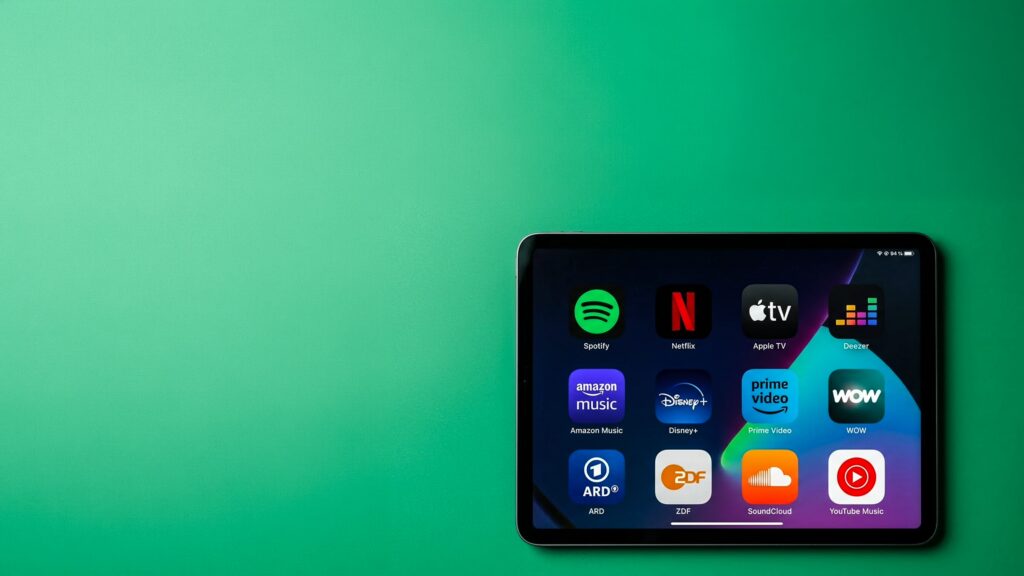
If you download a song from Spotify or a movie from Netflix to watch offline, are musicians or filmmakers entitled to an additional levy? Do manufacturers of computers, tablets and smartphones have to pay so that their devices can store such downloads?
What is it all about?
In Germany and other EU countries, manufacturers of computers, tablets and smartphones have to pay a device levy. This levy ends up with the authors, for example musicians, filmmakers or authors. The basic idea behind this is that a buyer also uses a device to copy copyrighted works, for example by copying a song from a CD onto their laptop. Authors are entitled to compensation for this permitted private use, which is financed as a lump sum via the device levy.
When streaming services such as Spotify and Netflix introduced the offline function, the question arose: does this also apply to such downloads? Two Dutch foundations that collect royalties for authors demanded corresponding payments from computer manufacturers HP and Dell. HP and Dell refused. The dispute went through the courts all the way to the European Court of Justice.
What actually happens when saving offline?
Many people think: When I press “Save offline”, the song or movie is on my device, just like a downloaded file. In reality, however, the process is quite different. The ECJ has examined this very closely.
If the offline function is activated, the streaming provider stores the content in an area of the device memory selected by the provider. The user can neither determine where this takes place nor move the file afterwards or copy it to another device. The content is secured by an encryption process that can only be reversed by the provider itself. If the subscription is terminated or the rights holder withdraws their consent, the content automatically disappears from the device.
The decisive factor is that the user has no control over this file. It does not belong to them. They can only play it within the provider’s app as long as they pay and the provider allows this.
Why is this not a private copy?
Copyright law has an important exception: private copying. It allows private individuals to copy copyrighted works for their own use without obtaining the author’s permission. A classic example is a purchased CD that is copied onto your own computer. As compensation for this permitted act, the authors receive the aforementioned device levy.
In his Judgment of 16.04.2026 – Ref. C-496/24 the ECJ first states that offline storage with streaming services is not a private copy within the meaning of the law, but a public access option. This sounds paradoxical, but can be explained as follows: A streaming service makes its entire offering, including the offline function, available to an unlimited number of subscribers. Every subscriber can access the same content at any time and from anywhere. In legal terms, this is a public provision of the work, not a private copying.
Mmaking a protected work available by means of an offline streaming copy […] must be regarded as making a work available to the public in such a way that members of the public may access it from a place and at a time individually chosen by them
The wrong person makes the copy
Even if offline storage were classified as a copying process, the exception for private copies would not apply. This is because it only applies to copies made by the private individual themselves. In the case of offline streaming, however, it is not the private individual but the provider who creates the copy. They technically store the file. When the user presses “Save offline”, they simply trigger a command to the provider. At the time the copy is created, the user does not yet have access to the content.
The author retains control
The private copying exception serves to compensate authors for copies that they cannot prevent and which therefore cause them damage. In the case of offline streaming, however, the author can prevent this process at any time. They have given the service permission to use their works by contract and can withdraw this permission at any time. There is no damage that needs to be compensated. This also eliminates the need for a device levy.
What if the author receives money via the streaming contract anyway?
Some authors already receive remuneration via their contract with the streaming service, which is also based on how often a work is played online. Does this make a difference to the device levy?
The ECJ denies this, at least in normal cases. The decisive factor is whether the author retains technical control over his work and expressly authorizes offline use. If so, the situation is clear. There is no uncontrolled infringement of his copyright, no damage is caused and no flat-rate fee is due. What the author earns through his contract with the service is his law, but is based on a different legal basis.
The case is only different if an author has no control at all over the copies of their works. In this case, they cannot rely on contractual remuneration to exclude the private copying levy.
What does the ruling mean in concrete terms?
Anyone who buys a device such as a laptop or smartphone pays a device levy that goes to the creator. This ruling does not change this. However, it clarifies that offline downloads from streaming services are not included in this calculation.
Manufacturers and importers of computers, tablets and smartphones do not have to pay an additional levy for offline streaming functions as long as the streaming provider retains technical control over the stored content.
Streaming providers such as Spotify or Netflix should ensure that their technical protection measures for offline content are seamless. This control is precisely the reason why the private copying exception does not apply.
Authors receive their remuneration for offline streaming via the license agreement with the service, not via the device levy. The ruling confirms that this is the legally correct approach.
Conclusion
Offline downloads from Spotify, Netflix and similar platforms may look like a personal copy, but according to the ECJ, they are not legally so. The provider retains control at all times and the author has consented to the whole thing. There is no uncontrolled encroachment on copyright and therefore no basis for a blanket levy on devices.
We are happy to
advise you about
Copyright!