

AI diagnosis
Software
patentable?
AI diagnosis
Software
patentable?
of
Can artificial intelligence-based methods for making medical diagnoses be patented? Has the Patent Office applied the exclusion rule of the Patent Act too strictly? What impact does the decision have on MedTech and AI start-ups?
Patent application for diagnostic method
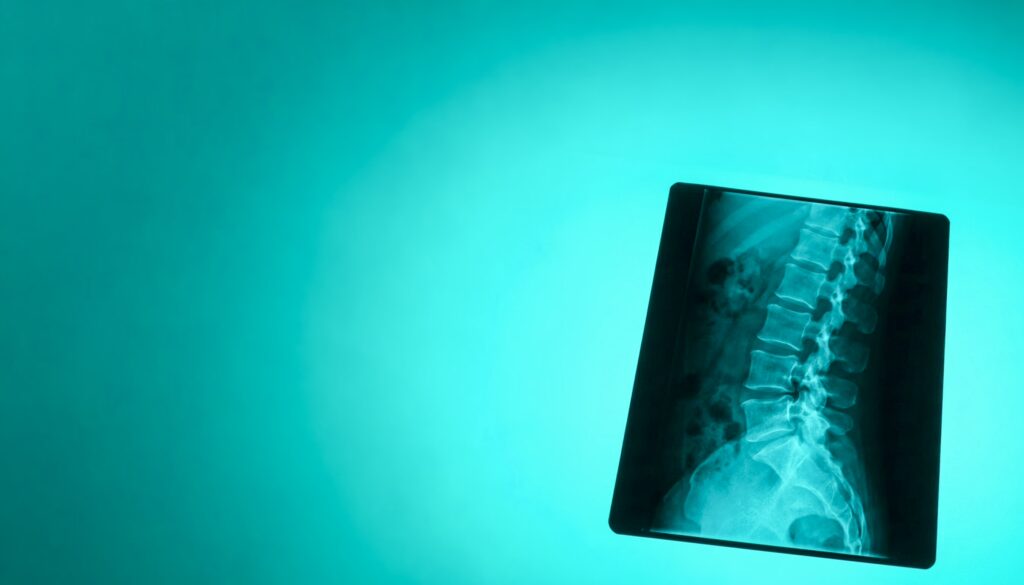
A technology company has filed a patent application with the German Patent and Trade Mark Office for a process for the automated analysis of image sequences. The invention addresses a problem that was previously unsolved in medical technology. Although individual X-ray or MRI images could already be automatically analyzed by software, this was not possible for complete image sequences consisting of many consecutive images.
The requested procedure is intended to close precisely this gap. It recognizes so-called candidate findings in the individual images of a sequence, i.e. contiguous image areas that could indicate a particular finding. It then analyzes whether these areas overlap between the individual images. The results are combined in a graph. The preferred application is vascular examinations using X-ray angiography, i.e. the imaging of blood vessels to detect constrictions.
Important for a later legal dispute: The image sequence itself, i.e. the examination of the patient, is expressly not part of the claimed procedure. The software only starts at the point where the images are already available.
Why did the Patent Office and the Federal Patent Court reject it?
The patent office initially only granted the patent in a limited version, which did not contain any specific application reference to stenosis detection or similar diagnoses. The appeal against this was rejected by the Federal Patent Court.
The court based its decision on an exclusion in patent law. According to this, diagnostic methods that are carried out on the human or animal body are generally not patentable. This provision is intended to warrant that doctors are not dependent on patented methods for diagnosis, which could restrict their freedom to treat.
The Federal Patent Court took the view that patentability was already excluded if one of the typical steps of a diagnostic procedure was carried out on the body. Since the image sequence to be analyzed is created by imaging procedures on the patient, the invention “necessarily” presupposes such a body-related examination.
How did the Federal Court of Justice rule?
In his Decision of 17.03.2026 – Ref. X ZB 5/25 the Federal Supreme Court did not follow the reasoning of the Federal Patent Court and overturned its decision. The exclusion contained in the Patent Act was not fulfilled.
The exclusion in the Patent Act is only fulfilled if all process steps belonging to the diagnosis are carried out on the human or animal body.
A process step is only carried out on the body if it involves an interaction with the human or animal body, which necessarily requires the presence of the body. Software that merely processes images that have already been recorded does not meet this requirement.
The case will now be referred back to the Federal Patent Court, which will have to decide again whether to grant the patent in the version applied for on the basis of the Federal Court of Justice’s new legal requirements.
What does this mean in practice?
AI-supported systems for the automatic evaluation of medical image data are generally patentable, provided that the actual image acquisition on the patient is not part of the claimed method. This is an important clarification for companies investing in image processing and diagnostic software.
At the same time, the Federal Court of Justice makes it clear that this reason for exclusion is not meaningless. As soon as a procedural step requires a physical interaction – for example, if the doctor has to apply a sensor or insert a catheter – the procedural step is deemed to be “performed on the body”. The exclusion remains in place for such steps.
Companies wishing to protect software technology that works on existing measurement or image data without intervening in the examination process on the patient are now on safe legal ground. When formulating the patent claims, however, care must be taken to ensure that the body-related preliminary procedures do not appear as part of the invention.
Conclusion
The Federal Court of Justice’s decision is an important signal for the entire medical technology industry. The clear statement that only methods in which all diagnostic steps take place directly on the body are excluded from patent protection opens up considerable scope for the patenting of AI diagnostic software, image analysis systems and related technologies.
The decision thus complements the line already taken by the European Patent Office in 2005 and expressly confirms its validity in German law. Companies active in this field should review their existing patent strategies in the light of this decision.
We are happy to
advise you about
Patent law!