



OXXO
is not
XOXO.
OXXO
is not
XOXO.
by
Are four identical letters enough to create a likelihood of confusion if only the first two are swapped? And what’s left of a word when a big butterfly is emblazoned across it?
A Butterfly vs. OXXO
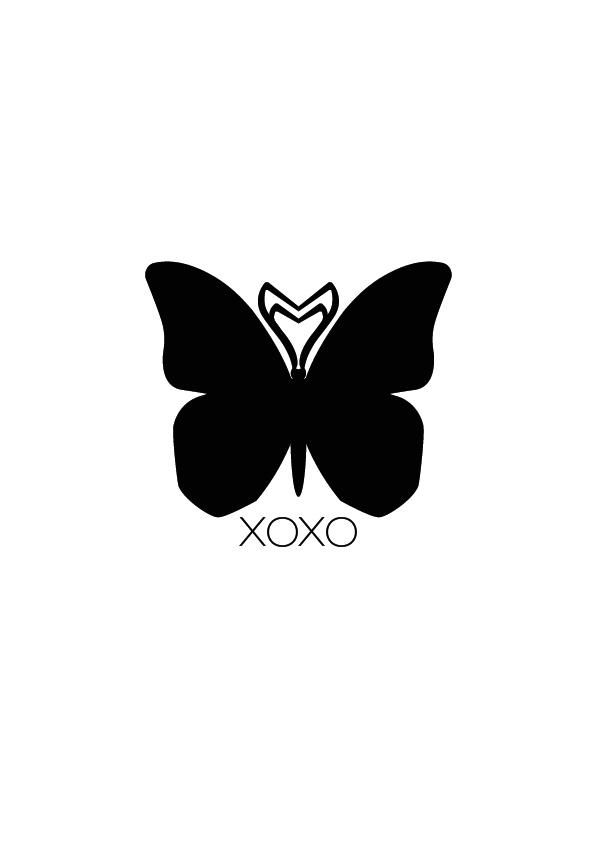
On April 20, 2024, a private individual from Italy filed an application for an EU trademark with the EUIPO. The mark depicts a large black butterfly. Below it, in significantly smaller capital letters, is the word XOXO. The mark was sought for protection for bags and clothing.
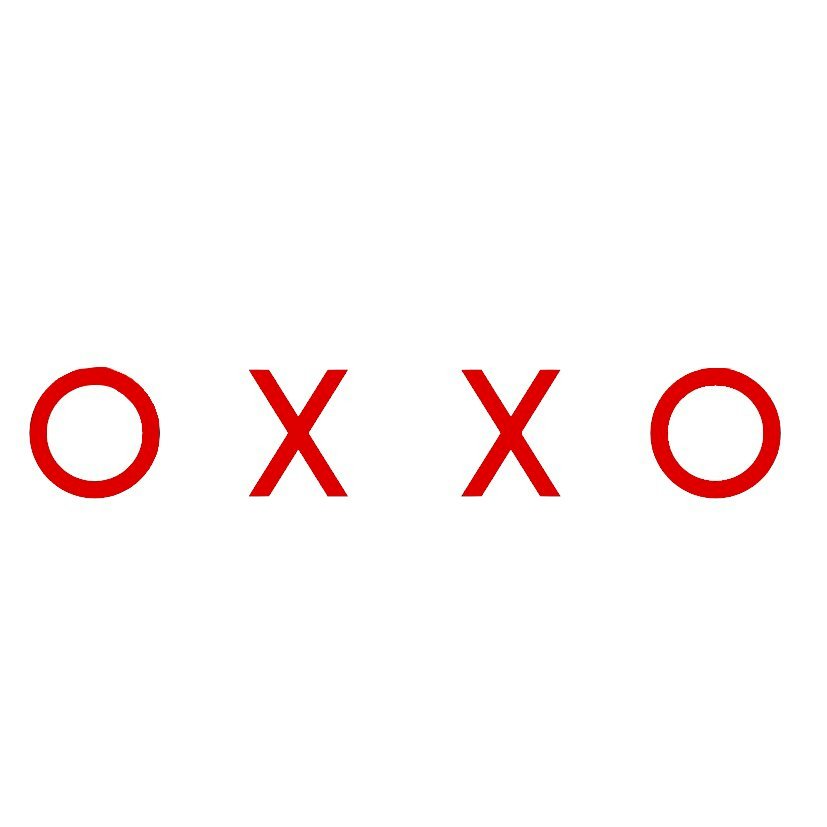
On August 5, 2024, Oxxo Tekstil Sanayi Ve Pazarlama AŞ of Istanbul filed an opposition. By filing an opposition, the owner of an earlier trademark can prevent a later trademark that is likely to cause confusion from being registered. This is standard practice in trademark law. The textile company relied on two EU trademarks. One is the word mark “OXXO,” registered on November 13, 1998, for sweaters, shirts, pants, and other clothing. The other is a red figurative mark “OXXO” from 2018.
OXXO Word Mark
Registered Figurative Mark XOXO
The Opposition Division of the EUIPO rejected the opposition on May 28, 2025. The Board of Appeal upheld this decision in its ruling of December 2, 2025 (R 1336/2025-5). The marks were found to be only very slightly similar visually and slightly similar phonetically. Conceptually, they were different. The red figurative mark was deemed even less similar because the mark applied for was not red. The company filed a lawsuit challenging this decision.
The textile company’s arguments
At its core, the argument was essentially a matter of letters. Both words consisted of the same four letters, were the same length, and ended identically with XO. The only difference lay in the order of the first two letters. Word elements generally had a stronger impact on a trademark than graphic elements. Furthermore, the butterfly is a common motif in fashion that lacks originality.
In addition, there were arguments from the industry. Fashion is increasingly being purchased online, and consumers rarely see the trademarks side by side. They might therefore mistake XOXO for a sub-brand of OXXO. Finally, the company cited a 2018 decision by the UK Intellectual Property Office (UKIPO). According to that decision, XOXO could be considered a fanciful word.
The General Court finds no likelihood of confusion
In its judgment of November 18, 2026—Case No. T-69/26— the General Court of the European Union (GCEU) dismissed the action. The decision of the Board of Appeal therefore stands. As the Board of Appeal had done, the General Court examined only the earlier word mark.
The textile company’s starting position was not bad. It was not disputed that the registered clothing line includes shirts and is, in that respect, identical to the goods covered by the earlier trademark. According to the EUIPO’s findings, bags and shirts are similar because both contribute to the “look” and usually come from the same manufacturers. The average distinctiveness of OXXO—that is, its ability to serve as an indication of origin—was also undisputed. Nevertheless, there was no likelihood of confusion.
Why does the butterfly overlap the word?
In the court’s view, the butterfly is the dominant element of the mark applied for. It is large, centered, and positioned at the top, and draws attention to itself. The word “XOXO” below it should not be disregarded. However, in the overall impression, it plays a weaker, subordinate role.
The court rejected the argument that the butterfly was a hackneyed fashion motif. Even an image with little imaginative content could have meaning for the public. The stylized depiction had no connection to bags or clothing and was therefore moderately distinctive.
From a visual comparison, a clear conclusion follows. The only thing the signs have in common is the ending “XO,” and that appears in the less distinctive part of the trademark applied for. The fact that both words have four letters would hardly be noticed by the public anyway. The alphabet is limited; many words are the same length and share individual letters. The visual similarity is therefore very low.
Is a single letter transposition sufficient for short trademarks?
In this case, yes. The shorter a mark is, the easier it is for the public to perceive each individual element. With short words, even minor variations can create a different overall impression.
This becomes particularly clear when it comes to sound, where the butterfly plays no role. The company had argued that both characters are spelled out and that the same sounds are heard in a different order. The court acknowledges that both words can be pronounced letter by letter. However, an “O” and an “X” sound distinctly different. The beginning of both characters is therefore audibly distinct. The court summarizes the core of its reasoning as follows.
Given that the word elements of the conflicting trademarks are short […], the reversed order of the first two letters of the trademarks results in a significant difference in the overall phonetic impression, which an average consumer would readily perceive
What do hugs and kisses mean in a brand comparison?
The third element is the meaning of the signs. OXXO has no meaning in any language of the European Union. XOXO, on the other hand, is understood by at least a portion of the public as “hugs and kisses”—that is, as a greeting involving hugs and kisses. The court bases this on its judgment of May 13, 2020 (Case No. T-503/19). In that case, the word mark XOXO was rejected for bags and clothing, among other goods, due to a lack of distinctiveness. For this segment of the public, XOXO is an advertising message about love and affection, not an indication of origin.
Added to this is the butterfly, which also conveys a concept. If one mark has a meaning and the other does not, the two are conceptually dissimilar. That was the case here.
The British ruling did not help the textile company. The EU trademark is an autonomous system with its own rules. The EUIPO and the court are not bound by decisions from member states or third countries.
Don’t online retail and sub-brands count?
Even the unique characteristics of the fashion industry did not change the result. Clothing, shoes, and headwear are generally chosen based on their appearance. This applies both in stores and in online retail, which requires a visual inspection of the merchandise. However, appearance is precisely the area where the differences are most pronounced.
A submark must share a common dominant element with the main mark. However, XOXO does not share any distinctive element with OXXO. The similarity in the letters is overshadowed by the differences at all levels.
What does this ruling mean for your trademark?
- Short trademarks have a narrow scope of protection. If you own a trademark consisting of three or four letters, you are not protected against every sign containing those same letters. Even a different order of the letters at the beginning of the word may be sufficient. Before filing an opposition, take a sober look at how much actually matches.
- The image can be the deciding factor. A large, central image element often determines the overall impression of a word-and-design trademark. For applicants, this can create a distinction from earlier word trademarks. However, only this exact combination is then registered.
- Meanings create a distinction. If one mark has a recognizable meaning and the earlier one does not, this argues against a likelihood of confusion. At the same time, such a meaning can weaken the distinctiveness of one’s own word, as XOXO demonstrates.
- Do your research before filing an application. A trademark search reveals which prior marks are in the way and how closely your mark resembles them. This allows you to adjust the design before facing the prospect of an opposition proceeding through multiple levels of appeal.
Conclusion
An anagram made up of the same four letters is not, in and of itself, sufficient to give rise to a likelihood of confusion, even in the case of identical goods.
The textile company had argued that verbal elements generally have a stronger impact on a trademark than figurative elements. The court did not explicitly address this objection, but instead focused on the size and position of the butterfly.
Furthermore, the ruling does not distinguish between the different segments of the audience in its overall assessment. For consumers who are not familiar with “XOXO” as a term of endearment, the two sequences of letters are simply meaningless. For them, only the butterfly creates a conceptual distinction.
We’d be happy to
advise you on
trademark law!