


Video and 3D
when registering
designs.
Video and 3D
when registering
designs.
of
The EUIPO now accepts 3D files and videos as illustrations of a design in design applications. What does this new option mean for protection outside the EU?
The first video and 3D designs have been submitted
As of July 1, 2026, the final phase of the reform in design law is fully in effect. The basis for this is Regulation (EU) 2026/715 on EU design, which replaces the previous Regulation (EC) No. 6/2002 .
We have already reported on the key changes introduced by the reform. In this article, we will focus on the newly accepted file formats. Designs can now also be filed with the EUIPO via video and 3D files. On July 28, 2026, the EUIPO announced that the first EU designs presented in this format had been published. In the first half of July 2026 alone, the Office received 37 applications with video representations and 20 with 3D representations. Although this represents only about 1.3 percent of all design applications filed in July 2026 using the new formats, it already shows a measurable share shortly after their introduction.
Requirements for Design Applications via Video and 3D
A design may be presented statically, dynamically, or as an animation. It is essential that the applicant choose exactly one presentation method per design. Static and animated views must not be mixed.
For static views, up to ten JPEG files are allowed, each with a maximum size of 2 MB. For animated presentations, however, only a single MP4 file is permitted. It may be no larger than 20 MB and must comply with the ISO/IEC 14496-14:2003 standard. For three-dimensional, rotatable views, the OBJ or STL formats are used, also with an upper limit of 20 MB. The entire application must not exceed 1 GB, and filenames are limited to 25 characters.
Once you have registered, you can no longer change the selected display format. If you choose a video, you cannot switch to static views later without redefining the scope of protection. Careful selection of the format is therefore more than just a technical formality.
The background must remain neutral, and features not claimed must continue to be identified by disclaimers. However, the dashed line traditionally used for this purpose is largely ineffective in video and 3D. The EUIPO recommends using color shading, borders, or blurring of the unprotected areas instead.
Two Real-World Examples
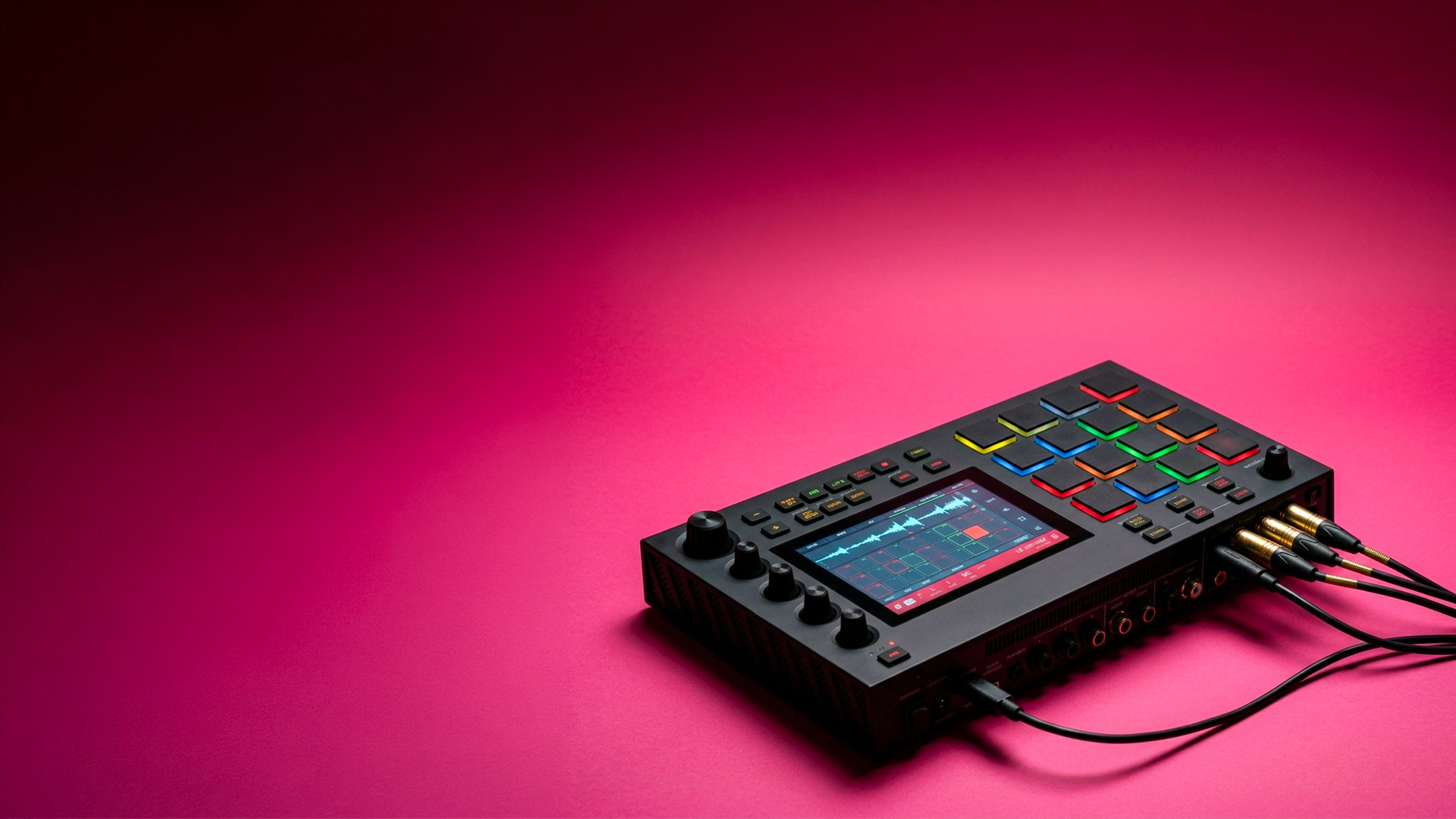
The first design, presented in a video, protects the animated user interface of a mobile game by the German company Lessmore GmbH. Here, the movement itself is part of the protected appearance. This was made possible by the expanded definition of the term “design.” Since the reform, this definition has explicitly included movement and transitions.
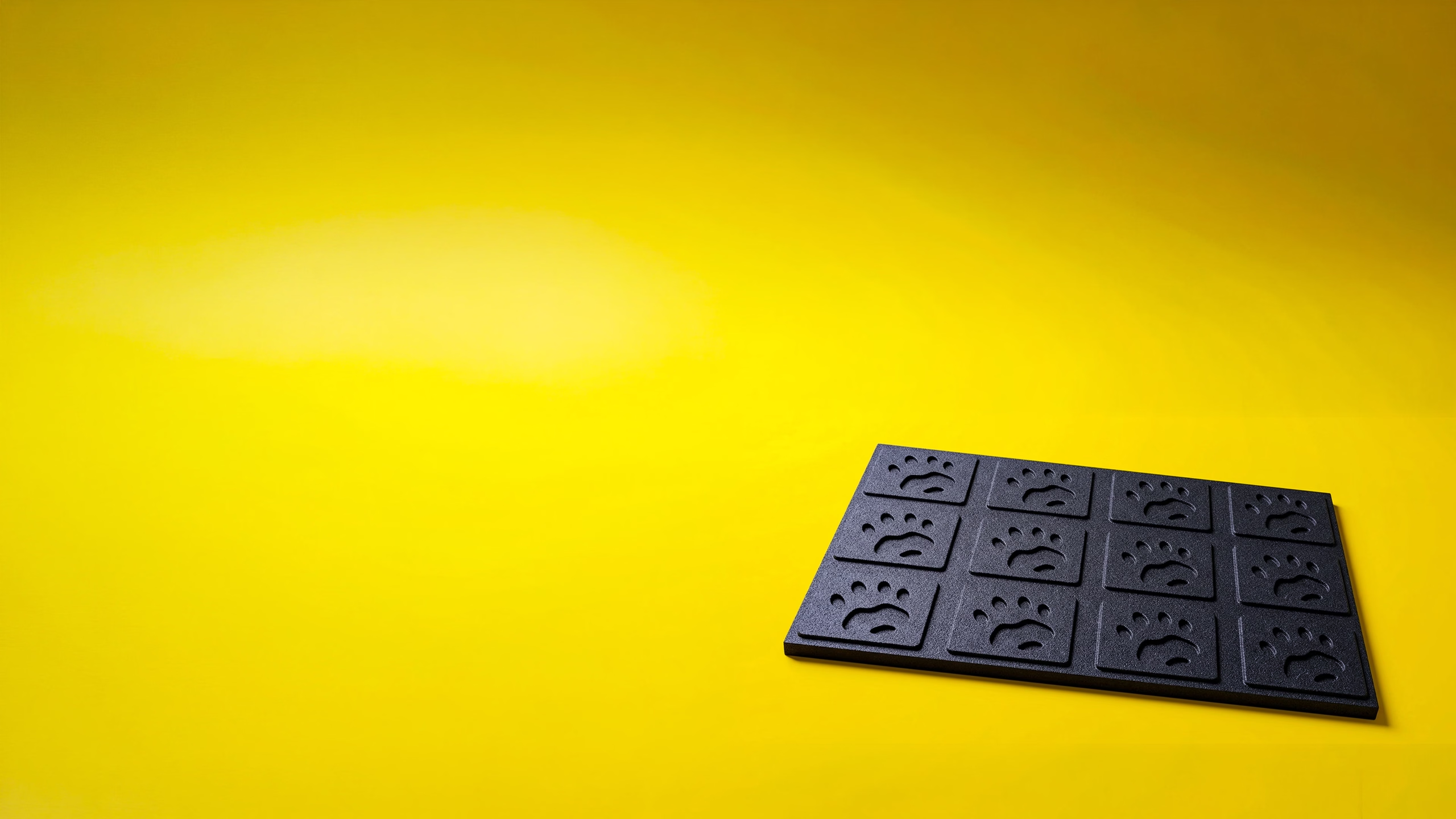
The first design, presented as a 3D file, comes from the Belgian company Arranged BV. It protects a cube-shaped tray with a smartphone holder that can be viewed from all angles.
Unresolved Issue with International Applications
For companies with international protection ambitions, it’s worth looking beyond the EU. WIPO’s Hague System allows for a single application covering 99 contracting states. This is precisely where a gap becomes apparent.
The EUIPO itself points out that other countries may not recognize dynamic or animated designs in a priority application. To date, the Hague System has required only photographs, drawings, or other graphic representations as a reproduction of the design. A report to the Assembly of the Hague Union dated March 31, 2026, confirms the current status. The relevant WIPO working group is discussing the introduction of video and 3D files as application formats but has not yet reached a decision on the matter.
Anyone who wishes to protect a European video or 3D design internationally must therefore take this into account from the outset when developing their filing strategy. For an international application, it may therefore make sense to file a separate application for an independent, purely static representation of the same design and to use that as the basis.
Here’s how to do it
- Decide on the format early on.
When designing, determine whether a video, a 3D file, or traditional renderings will best showcase your design. - Save static views as well.
If you’re considering an international application, create high-quality static views for every design filed via video or 3D. - Carefully review the disclaimer.
For moving images, use shading or blurring instead of dashed lines to avoid unintentionally expanding the scope of protection. - Seek advice on your filing strategy.
Before filing a design application, determine in which countries protection is needed and tailor the chosen format accordingly.
Conclusion
The new filing formats solve a real-world problem. For the first time, they allow animations, interfaces, and three-dimensional products to be depicted exactly as users actually perceive them.
The challenge remains that the EU is significantly further along with this change than the international registration system. As long as WIPO is only discussing the matter, it remains unclear how long companies will have to expect to incur double the effort for the same design.
Those who wish to seek protection exclusively in Europe can use the new formats without hesitation. Those seeking international protection should plan to file an additional application for a static representation.
It’s especially worth taking a look at the new formats for software and app providers with graphical user interfaces. For the first time, these formats allow for the accurate depiction of motion sequences.
We’d be happy to
advise you on
Design rights!