

Pinterest pin
infringement of
copyright.
Pinterest pin
infringement of
copyright.
by
Can a company post someone else’s photo on its Pinterest board just because the platform suggests it? And is management liable if an employee posted the pin? The Hamburg Regional Court has provided a clear answer regarding the relationship between Pinterest and copyright law and awarded a photographer 1,800 euros in damages.
An Architectural Photo Amid Knives and Scissors
In 2015, a professional photographer specializing in architecture created a photo series for an architectural firm. The firm was permitted to display the images on its own website. The photographer had not granted rights for use on social media or for distribution to third parties—neither to the firm nor to a magazine that also published the photograph.
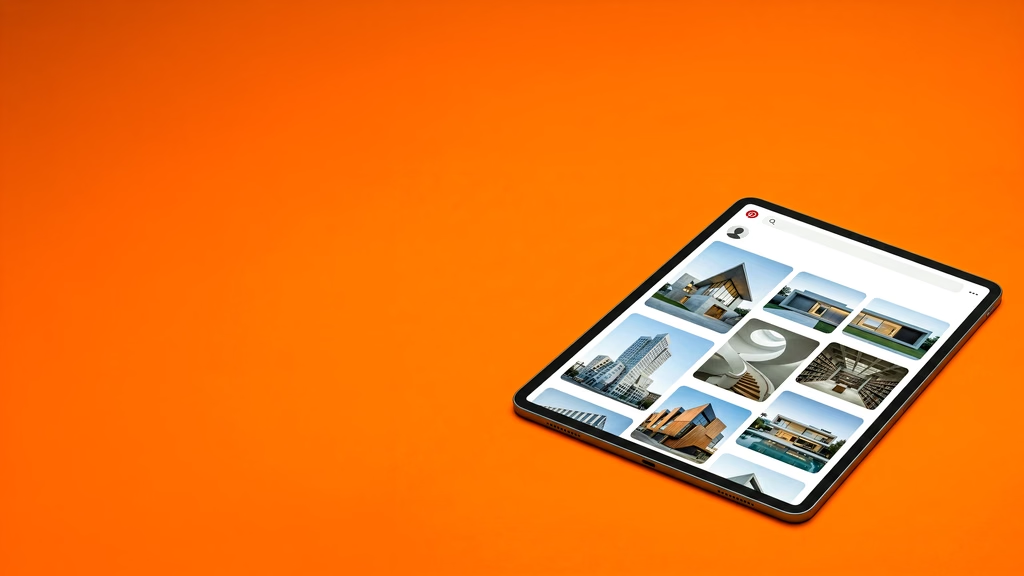
A company that sells handmade knives and scissors used Pinterest for advertising. Since at least August 4, 2017, one of the architectural photos had appeared on one of the company’s boards, alongside images of its own cutlery. The photo was embedded there via a pin. On Pinterest, a “pin” is a link that displays an image from another page on one’s own board. The photographer’s name was missing.
The photographer issued a cease and desist letter to the company and its sole managing director in a letter dated February 19, 2024. The company removed the photo but refused to sign a cease and desist declaration subject to a penalty and rejected all claims for payment.
The company’s defense
The company argued that Pinterest had recommended the photo for use. It contended that, according to common understanding, use of the platform is free of charge, and therefore it had assumed the use was permitted. Furthermore, the managing director had not posted the pin himself. There was no risk of a recurrence because the photo had been deleted immediately.
Hamburg Regional Court Upholds Injunction and Damages Award
Inits judgment dated September 17, 2026—Case No. 310 O 162/24— , the Hamburg Regional Court upheld the default judgment that had initially been issued. The company and its managing director are no longer permitted to make the photo publicly available. They are jointly liable for 1,800 euros in damages, plus interest and warning letter costs.
Does a pin on Pinterest constitute copyright infringement?
In the court’s view, a pin constitutes a public display of the photo. This is the legal term for making a work accessible to an indefinite number of people. Under copyright law, only the author has the right to do so.
The court relies on the case law of the European Court of Justice regarding hyperlinks. According to this case law, simply posting a link can constitute reproduction. By pinning the photo, it is visibly reproduced on the company’s wall. The wall is directed at all users of the platform and thus at a large, indeterminate number of people.
It does not matter whether the pin links to a third-party website or to another Pinterest account. The Chamber refers to its own previous case law on this matter. In the present case, the pin led to the website of a magazine that itself did not have the rights to redistribute the content. The photo had therefore already been published online without authorization.
Why isn’t the platform’s recommendation sufficient?
The European Court of Justice distinguishes based on whether a link is posted with the intent to make a profit. Anyone who links for commercial purposes must verify whether the work on the linked page has been lawfully published. If they fail to do so, it is presumed that they were aware of the infringement. This presumption can be rebutted.
It is undisputed that the company used the Pinterest board to advertise its cutlery. It had not reviewed any of the content. In the court’s view, the assumption that Pinterest is free of charge did not exonerate the company.
The “recommendation” of a photograph on Pinterest cannot negate existing duties to investigate on the part of linkers acting for profit, as clarified by the ECJ in its GS Media decision.
The responsibility lies with the user, who decided on their own to post the photo on their wall. Even if one were to interpret the recommendation as permission granted by Pinterest, that wouldn’t help. You cannot acquire rights of use in good faith from someone who does not have them themselves.
Is management also liable?
Yes, according to the court, even without clicking on it themselves. Decisions regarding a company’s advertising presence—including on social media—are typically made at the management level. This includes determining whether to post only the company’s own content or also link to third-party content, and how these links are monitored.
If a company wishes to dispute this, it must explain how responsibilities are actually allocated and monitored. According to the company’s own statement, this was a family-owned business. The company had not presented any evidence of a different organizational structure. Therefore, who set the PIN was not decisive.
Deleting the photo did not eliminate the risk of recurrence. A cease-and-desist declaration subject to a penalty is sufficient for that purpose. The fact that the photo had not been published for more than two years did not change this.
How much is the damages award?
The court calculated the damages based on the so-called “license analogy.” This refers to the compensation that reasonable contracting parties would have agreed upon for the use of the photo. Whether the company would actually have paid is irrelevant.
It was undisputed that the photographer had his own licensing policy of 900 euros per photo and social media post. The court rejected the argument that the use was only temporary, as it lasted approximately six and a half years. Due to the lack of attribution, the court doubled the amount to 1,800 euros.
Conclusion
The Hamburg Regional Court consistently applies the principles regarding hyperlinks to Pinterest. This is beneficial for photographers but poses a real risk for companies with well-maintained pinboards. Older pins can result in claims for damages and interest for years to come. As we have already shown in the case of YouTube framing, even the mere embedding of third-party content can have copyright implications.
It remains to be seen whether this line of reasoning will hold up. In a ruling dated January 12, 2026—Case No. 14 O 133/23— the Regional Court of Cologne referred questions to the European Court of Justice regarding the sharing of third-party posts on social media. The case involves Facebook and, among other things, whether the presumption of knowledge in cases of intent to make a profit is applicable to such platforms. The Hamburg Regional Court distinguishes its case from this one because the wall is permanently used for advertising. It is unclear whether the European Court of Justice will uphold such a distinction.
We’d be happy to
advise you on
Copyright!