

Lidlship
loses against
LIDL.
Lidlship
loses against
LIDL.
by
Can a coach name his consulting brand after a discount retailer if he isn’t actually in the retail business? And is it enough that no one would confuse the marks? The Federal Patent Court has canceled the “Lidlship” trademark and extended LIDL’s protection based on brand recognition far beyond the retail sector.
An Acronym for Executives
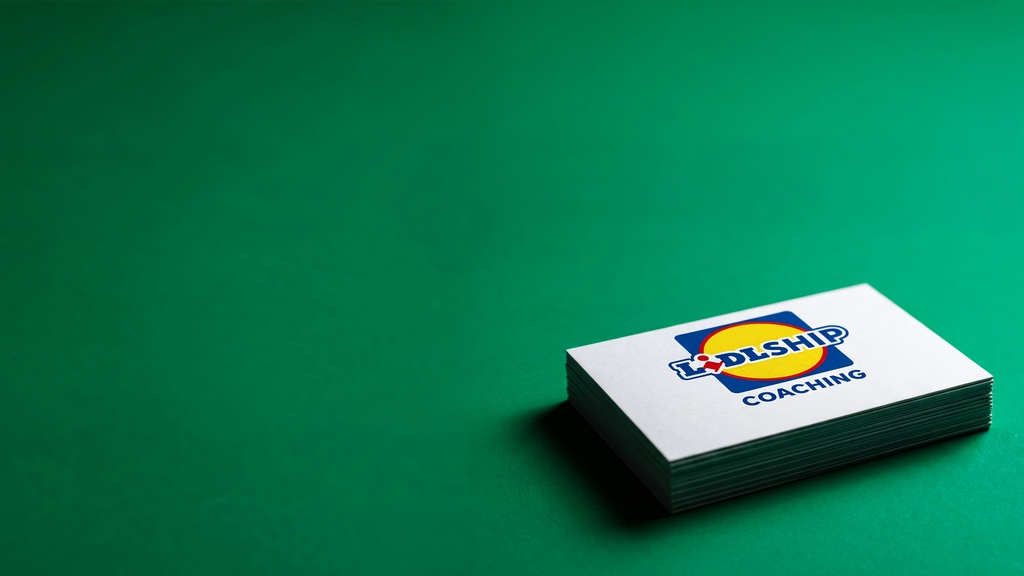
On January 4, 2020, a coach filed an application with the German Patent and Trademark Office (DPMA) for the word mark “Lidlship.” It was registered on March 4, 2020. The trademark was protected for consulting services related to corporate management, personnel deployment, and the recruitment of executives. It also covered scientific research, quality assessment, and quality control.
According to the trademark owner, “Lidlship” stands for the first letters of eight terms in his coaching approach. These are learning, integrity, humility, love, self-confidence, action, inspiration, and power. There is no connection to the discount retailer.
The company behind LIDL saw things differently. On July 1, 2020, it filed an opposition—that is, a formal objection by the owner of an earlier trademark against a new registration. It based its case on the word mark “LIDL” and the well-known yellow-and-blue logo. It asserted a likelihood of confusion and the special protection afforded to well-known trademarks.
Why the DPMA Rejected the Opposition
The DPMA rejected the opposition in its entirety on April 4, 2022. The marks differed significantly in length, sound, and typography. “Lidl” did not stand out independently in the single-word mark.
While the Office acknowledged the reputation of LIDL, it did so only in connection with retail services. There was no connection to consulting and research. The marks were not so similar that the public would mentally associate them. Consequently, protection based on reputation was also ruled out. The trademark owner did not submit any further comments during the subsequent appeal proceedings.
Federal Patent Court Orders Cancellation
The Federal Patent Court overturned the DPMA’s decision and, in its order dated August 27, 2026—Case No. 29 W (pat) 36/22 —ordered the cancellation of “Lidlship.” It based the cancellation solely on the word mark LIDL. It left open the question of whether there was a likelihood of confusion in addition to this.
When is a trademark considered well-known?
A trademark is well-known if a significant portion of the relevant public is familiar with it. Case law does not require a specific percentage. In the LIDL case, the court deemed a survey unnecessary. The trademark’s fame was deemed to be common knowledge—that is, recognizable to anyone from reliable sources without requiring specialized knowledge.
The judges considered themselves part of the relevant public. They based their ruling on the trademark’s decades-long presence in retail and on extensive weekly advertising. According to the court’s findings, Lidl operates more than 3,250 stores in Germany with more than 100,000 employees. Furthermore, the EUIPO Board of Appeal had already recognized the reputation of LIDL as early as 2012. The court ultimately concluded that the brand enjoyed exceptional reputation.
Is a slight similarity between the marks sufficient?
There is no need for a likelihood of confusion in order to protect a well-known trademark. It is sufficient that the public mentally associates the new trademark with the well-known one. However, a certain degree of similarity between the trademarks is still required for this.
The court took a cautious approach in assessing the similarity. It found that the marks were less than average in terms of sound and far below average in terms of visual similarity. There was no conceptual similarity. Ultimately, however, this was deemed sufficient because LIDL is exceptionally well-known.
The key factor was the recognizability of “Lidl” at the beginning of the word. The unusual sequence of letters—“d” and “l”—and the absence of a long “e” stood out. In addition, the last name “Lidl” is rare. “Lidl” and “ship” also do not merge to form a new term with its own meaning. Even someone who thinks of “leadership” would still recognize “Lidl” as a distinct element.
At the heart of the reasoning lies a consideration regarding very well-known trademarks. Such a trademark becomes an independent economic asset.
In the minds of the relevant public, it is increasingly becoming detached from the goods and services for which it is protected and used.
If the public encounters such a trademark in an unfamiliar context, it will nevertheless associate it with the owner. The more faithfully the well-known trademark appears in the new trademark, the more likely this is to be the case. In this regard, the court refers to its own earlier decisions, such as the case involving the trademark DEGOBASF versus BASF.
What does “dilution” mean?
Dilution refers to a well-known trademark losing its ability to clearly identify a company. In the court’s view, the more distinctive a trademark is, the easier it is for imitators to weaken it. In cases of exceptional recognition, protection may be granted that covers virtually all goods and services. The court cites trademarks such as Allianz, BASF, adidas, and LEGO as examples.
The decisive factor here is the perspective of the end consumers to whom LIDL directs its offerings. The fact that “Lidlship” is aimed more at businesses did not play a decisive role. Even the mere assumption that a third party might use a similar mark would jeopardize LIDL’s suitability as a distinctive indication of origin.
The court added another point: Lidl is no longer just a retailer. It offers electricity, photo services, mobile phone service, and travel, and operates a loyalty card with a payment function. In addition, the company has collaborated with universities and supported startups.
Was there a justifiable reason?
The court found no justifiable reason for the choice of the symbol. The trademark owner had not even asserted any legitimate interests of its own. The meaning of the acronym was in no way recognizable to the public. There was neither an established right of prior use nor a well-established market practice. Nor could the sequence of letters be derived from a recognized coaching model.
What trademark applicants and trademark owners should take away from this
The decision affects both sides of a trademark dispute. In our view, five points are worth noting.
- Check new names before filing an application. A trademark search should not be limited to your own industry. If a name contains a very well-known trademark, there is a risk of dispute even outside your industry.
- Good intentions are not enough. A derivation known only to the applicant does not justify similarity to a well-known trademark. What matters is what the public perceives.
- Document brand recognition. Owners of strong trademarks should continuously document sales figures, advertising expenditures, market shares, and awards. Not every trademark is treated as being well-known to the general public.
- Monitor applications outside your industry as well. If you limit trademark monitoring to your own classes, you’ll overlook applications like these.
- Take advantage of the deadlines. Filing an opposition is generally the easier way to challenge a new registration than initiating a cancellation proceeding at a later date. It can only be filed within a short period after publication.
Conclusion
Anyone who uses the name of one of Germany’s best-known retailers unchanged at the beginning of their trademark takes a high risk under trademark law. It is important to note how little similarity between the marks is permissible. The court classified the similarity as below average to well below average and nevertheless allowed protection based on reputation to apply. Our article “Red Bull Wins Against Cowboy” also illustrates how protection based on reputation plays out in other cases.
We take a critical view of the rationale for the dilution. The European Court of Justice requires that consumer behavior change or that there be a serious threat of such a change. The court cites this standard but then essentially derives the threat from the brand’s recognition itself. It remains unclear how a coaching program is supposed to influence the shopping behavior of discount store customers.
We’d be happy to
advise you on
Trademark law!