


protection
for
LEGO figures.
protection
for
LEGO figures.
from
Every child knows Lego. To protect itself against imitators, Lego has tried to register its products as a 3D trademark. But is that even possible? The European Court says yes, at least for the Lego figures.
Trademark protection for LEGO
Lego building blocks and Lego figures have been popular with children for decades, but they are not particularly cheap. From Lego’s point of view, there is therefore a risk of imitation by third parties. After the patent protection for the Lego building blocks expired, Lego tried to have its building blocks and figures protected as a 3D trademark in order to keep unwelcome competition at bay. The European Court of Justice ultimately rejected protection for the bricks. A decision was still pending with regard to the figures.
A competitor company called Best Lock wanted to have the 3D trademark registered in 2000 declared invalid so that it could offer corresponding products itself. Best Lock argued that the shape of the product was due to its ability to be assembled with other interlocking components for play purposes and, like the Lego building blocks, represented a technical solution.
Decision of the European Court of Justice
The EGC (Judgment of 16.06.2015 – Ref. T-395/14 and T-396/14) did not follow Best Lock’s arguments and confirmed trademark protection for the Lego figures.
The court lacked sufficient evidence from Best Lock for the assertion that the shape of the goods was determined by their nature.
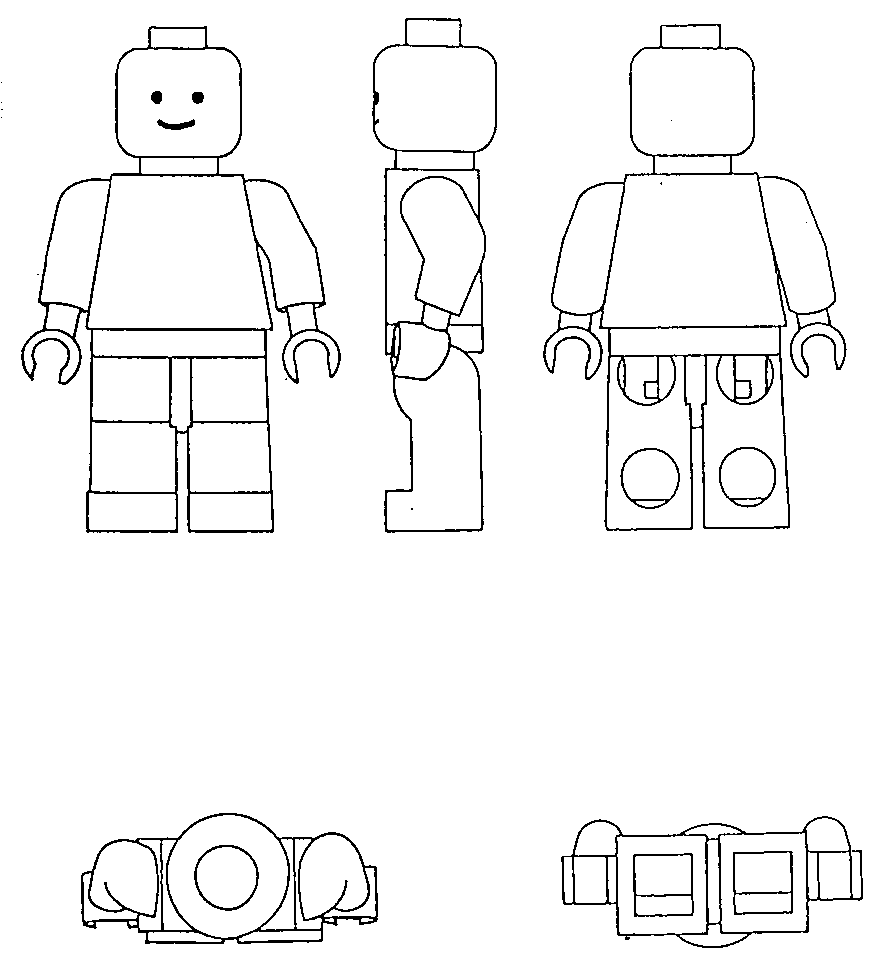
With regard to the argument that it is a shape that is necessary to achieve a technical effect, the court also did not follow Best Lock. In this respect, the court found that the Lego figures depicted in the trademark obviously did not have a technical effect with regard to the characteristic components (head, body, arm and leg). These parts also did not enable a connection with interlocking building blocks. Such a technical function could not be derived from the graphic representation alone (recess under the feet and the contact on the head). Ultimately, the shape of the Lego figures in this form is also not necessary to enable the assembly of building blocks. Rather, the Lego figures are given human features, which speaks against a purely technical effect.
Conclusion
Unlike the Lego bricks, the trademark protection for the Lego figures remains intact. Since the figures, unlike the bricks, have the typical and well-known Lego face and shape, they are not limited to their technical effect. Third parties are therefore free to produce figures compatible with Lego bricks as long as they look different from the Lego figures.
We are happy to
advise you about
Trademark law!