

Rubik’s cube
remains
protected.
Rubik’s cube
remains
protected.
from
In the 1980s, everyone had it, the Rubik’s Cube. While countless people still cut their teeth on the magic cube today, a German toy manufacturer tried to bring down a 3D trademark registered for the cube. The case has now been decided by the General Court of the European Union.
The RUBIKs cube
In 1999, a three-dimensional Community trademark for the Rubik’s Cube was registered for the British company Seven Towns Limited, which manages the intellectual property laws for the Rubik’s Cube.
Simba Toys wanted to have this 3D trademark declared invalid, as the trademark contained a technical solution in terms of rotatability, which could only be protected as a patent and not as a trademark. It should be noted that the patent protection had already expired in 2006 when Simba Toys filed the application.
Decision by the court
The EGC (judgment of 25.11.2014 – Ref. T-450/09) refused to cancel the trademark, as can be seen from today’s press release.
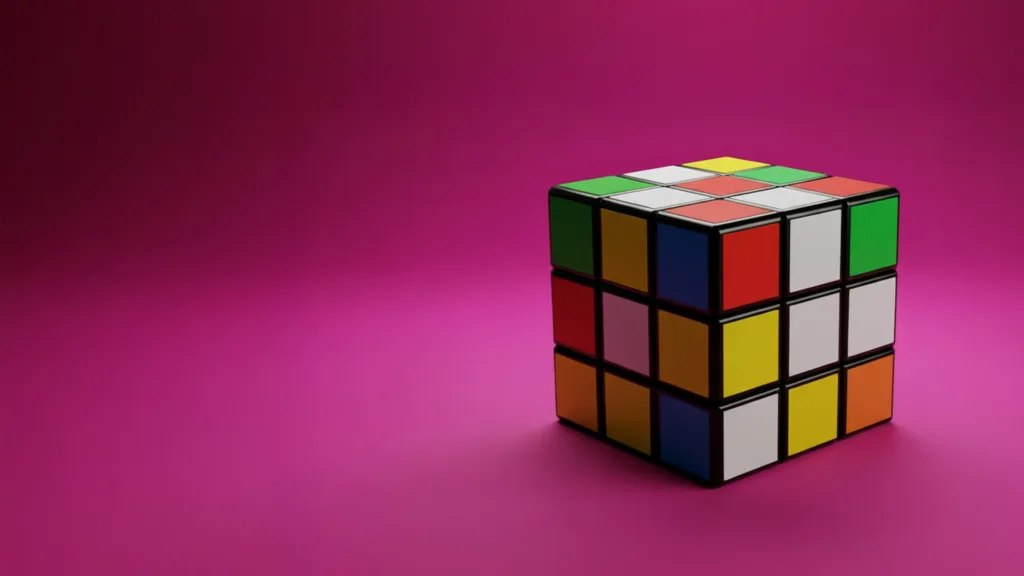
The subject matter of the trademark is, on the one hand, the cube as such and, on the other hand, the grid structure recognizable on each side of the cube. There is no indication from the thick black grid lines that individual parts of the cube are rotatable, so that they do not have a technical function.
The rotatability of the cube does not result from the black lines or the grid structure, but from the mechanism on the inside, which is not part of the trademark. Thus, the trademark does not contain a technical function and cannot be canceled for this reason.
A prohibition of three-dimensional puzzles by third parties is not associated with this. Only three-dimensional puzzles in the form of a cube with a grid structure applied to its surfaces could infringe trademark rights.
Last but not least, the grid structure differs from the appearance of other three-dimensional puzzles on the market, so that the required distinctive character also exists in this respect.
Conclusion
The 3D trademark enables a continuation of the distribution monopoly even after the patent protection has expired. However, this is only possible if the trademark itself does not contain a technical function. The protection of this ends when the patent expires.
Patent holders can use a suitable trademark strategy to try to obtain permanent protection for suitable products in this way, as unlike other industrial property rights, the trademark does not have a maximum duration, but can basically be extended indefinitely.
We are happy to
advise you about
Trademark law!