


Red Bull
wins against
Cowboy.
Red Bull
wins against
Cowboy.
of
Can a Spanish company market a beverage mark with a red horse on a yellow sun circle? Is the mere reminder of a well-known trademark sufficient to activate its scope of protection?
A cowboy rides in red and yellow
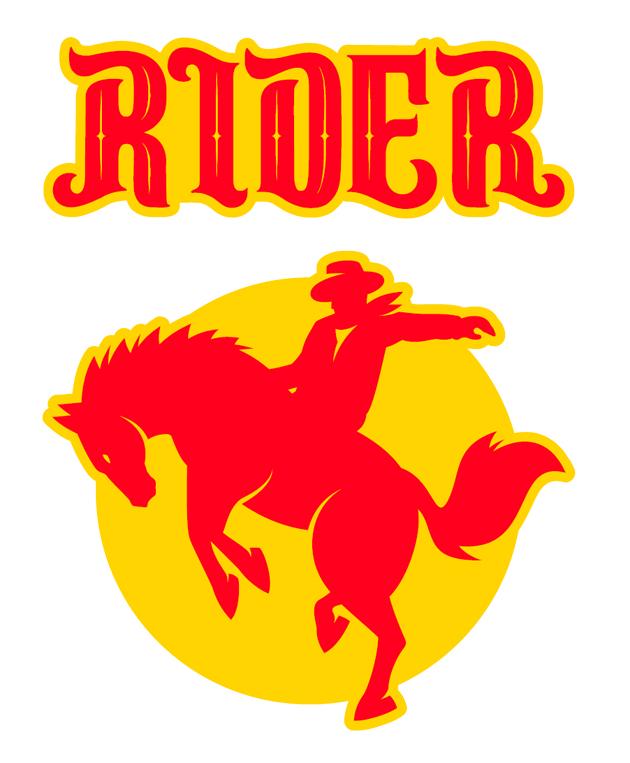
In June 2023, the Spanish company Ferbalmo, S.L.U. applied to the EUIPO for registration of a figurative sign as an EU trade mark. The sign bears the lettering “RIDER” in red, as well as the silhouette of a rearing horse with rider, also in red, in front of a yellow sun circle. Goods in Class 32 were claimed, including beer, non-alcoholic drinks and expressly also energy drinks.
Red Bull filed an opposition based on four earlier trademarks: two Austrian figurative trademarks and two European Union trademarks, all of which show the well-known motif of two red bulls in front of a yellow sun circle, partly with the lettering “RedBull”. Both likelihood of confusion and protection of reputation for well-known trademarks were invoked as the basis for opposition.
Opposition initially fails despite recognized brand recognition
The Opposition Division of the EUIPO rejected Red Bull’s opposition in March 2025. It expressly recognized that the Red Bull trademarks enjoy a high degree of recognition for energy drinks, at least in Austria and Germany, and have acquired above-average distinctiveness there. It also found that the goods were identical or at least similar.
However, its assessment of the similarity of the signs was decisive. The signs were visually and conceptually similar to a very limited extent at best. The similarities were limited to the red-yellow color scheme and the yellow background circle. These elements are of a decorative nature and are not capable of establishing a conceptual link in the overall impression. The conceptual difference between two fighting bulls on the one hand and a horse with a cowboy rider on the other clearly predominates. Therefore, there is neither a likelihood of confusion nor a relevant detriment to the trade mark.
New study confirms association with Austrian consumers
Red Bull filed an appeal in March 2025 and submitted new evidence as part of the grounds of appeal in July 2025. The centerpiece was a consumer survey conducted in Austria in April 2025 by an independent market research company. The study revealed that a significant proportion of respondents spontaneously associated the RIDER sign with Red Bull. When the RIDER name was specifically mentioned, the proportion of those who associated the symbol with Red Bull rose to just under half of those surveyed. Red Bull also referred to an earlier decision of the Fifth Board of Appeal of 13 January 2025 in the case BISON POWER v RED BULL, in which a similar case had been decided in Red Bull’s favor.
Decision of the Board of Appeal: Protection of reputation applies
The Board of Appeal of the EUIPO annulled the Decision of 12.03.2026 – Ref. R 0513/2025-1 annulled the first instance decision in its entirety and rejected the RIDER application. It relied exclusively on the protection of reputation under the relevant provision of the EU Trade Mark Regulation.
The Chamber first confirmed the undisputed findings on trademark recognition: The earlier Red Bull trademarks enjoy a high degree of recognition at least in Austria and Germany and are of considerable distinctiveness. The Chamber then corrected the first instance’s comparative assessment of the signs. Contrary to the lower instance, the similarity of the signs was not merely “very low”, but rather “low” overall. The decisive factors were the structurally identical arrangement of word and figurative elements, the visually similar use of a yellow sun circle as a background and the red colors of the jacking animals. On a conceptual level, the common concept of large, powerful hoofed animals in a rearing posture, head lowered, tail raised, both in front of a yellow sun circle, prevails. This conceptual consonance is sufficient to activate the protection of brand awareness.
The similarity of the conflicting signs, the strength of the reputation of the earlier trademark, its distinctiveness, its uniqueness, the complete overlap of the relevant consumer circles and the specific goods – all of this will lead consumers to establish a mental link between the signs.
The Chamber emphasized that no likelihood of confusion is required for the protection of reputation. It is sufficient that the relevant consumer establishes a mental link, i.e. that the younger trademark reminds them of the older one without confusing them. In view of the unique visual language of the Red Bull trademarks, the complete similarity of goods and target groups and the high degree of recognition, such a link was likely in the case in dispute. The consumer survey confirms this finding.
With regard to trademark detriment, the Board found that the use of the RIDER mark would be detrimental to the distinctive character of the Red Bull trademarks and at the same time exploit their reputation without justification. The RIDER mark takes over the image of power and strength built up by Red Bull with considerable investment and could be perceived by consumers as a cheaper alternative or variation of the Red Bull product. As Ferbalmo had not put forward any justifiable reasons for the choice of sign, the facts of the case of unlawful exploitation were fulfilled.
Practical note: What the decision means for trademark applicants
The decision illustrates several practice-relevant principles of European trademark protection for well-known trademarks.
Firstly, even a low degree of similarity of signs is sufficient for protection of reputation, provided that the other requirements – in particular a high degree of recognition of the mark and identity or similarity of the goods – are met. The Board expressly clarified that even a weak or distant similarity can be sufficient. The threshold is therefore significantly lower than for likelihood of confusion.
Secondly, the visual concept of a sign can be decisive. The Board of Appeal corrected the lower instance because it had underweighted the structural and conceptual parallels between the jacking up animal, the red coloring and the yellow sun circle. Anyone who imitates a well-known figurative mark in a modified form bears the risk that the association will nevertheless be established.
Thirdly, subsequently submitted consumer studies can be admitted in appeal proceedings if they are capable of contradicting the findings of the first instance. The Board accepted the study conducted in April 2025 as admissible new evidence because it was based on the original submissions and refuted the findings of the first instance.
Fourthly, the burden of proof for a justifiable reason lies with the applicant of the younger trademark. Anyone who does not provide convincing arguments for the choice of sign is exposed to the accusation of inadmissible exploitation of reputation.
Conclusion
The case shows once again that a similarity in the overall impression, even without any likelihood of confusion, can be sufficient to exploit the reputation of a well-known trademark.
Anyone wishing to register signs with similar imagery, colors or concepts for identical or similar goods should carefully examine the risk of collision before making significant investments in registration and market launch. Similarities with well-known trademarks should be avoided, as these enjoy very broad protection.
We are happy to
advise you about
Trademark law!