

Motion mark
vs.
Figurative mark.
Motion mark
vs.
Figurative mark.
from
How is a motion mark assessed in opposition proceedings – and what role do dynamic elements play when comparing signs? The EUIPO decides in the Lamborghini dispute.
Motion mark versus word/figurative mark
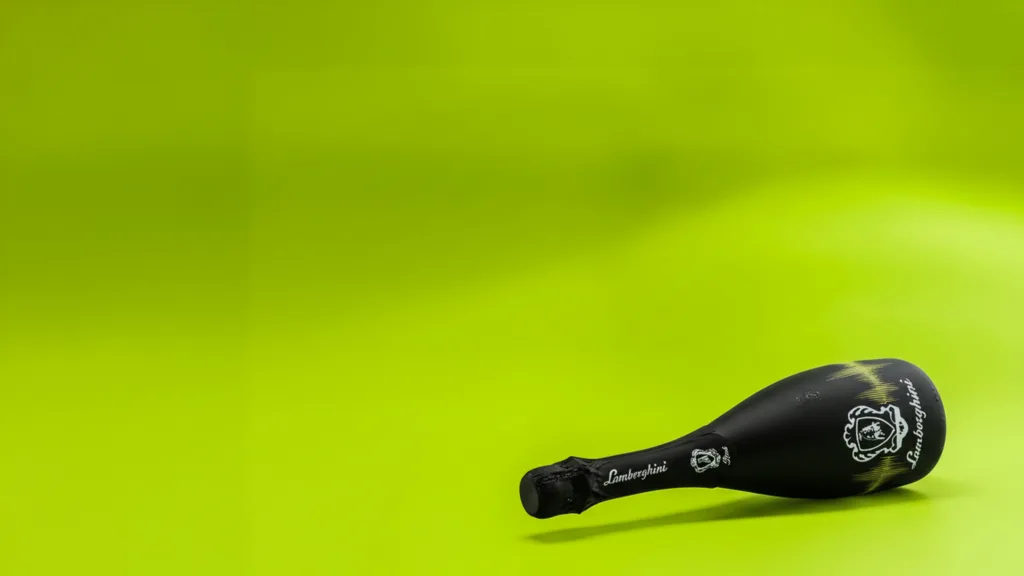
In December 2023, Tenuta Lamborghini S.r.l. Società Agricola, an Italian agricultural company, applied to the European Union Intellectual Property Office (EUIPO) for EU trademark no. 18 963 666 “Lamborghini”. The special feature: It was a motion mark showing a wine bottle rotating around its vertical axis, changing color from green to blue and yellow to purple. The application covered alcoholic and non-alcoholic beverages in classes 32 and 33.
Tonino Lamborghini S.p.A., a company from Modena that sells lifestyle products under the name “Tonino Lamborghini”, filed an opposition in April 2024. It relied on several older EU word and figurative marks showing the lettering “Tonino Lamborghini” and a stylized bull emblem in a shield.
The decision of the EUIPO
The Opposition Division upheld the opposition in full on 29.01. 2026 – AZ. B 3 215 161 and rejected the trade mark application for all the goods claimed.
Special features of the motion mark
The Opposition Division had to deal with the question of how to assess a motion mark as a rather unusual type of mark in a comparison of signs. According to the EUIPO’s common practice, motion marks are considered distinctive if they contain a distinctive element – be it verbal or figurative – that moves or changes its position, color or other elements, even if the movement or change itself is not distinctive.
In this case, the motion mark consisted of a rotating wine bottle with changing colors. The Division found the dynamic aspects – rotation and color change – to be at most weakly distinctive as they merely serve to present the trademark from different angles and in different color schemes.
Rather, the decisive factor for the comparison of the signs was that the motion mark contained the static elements “LAMBORGHINI” (twice on the bottle) and a bull depiction in the shield – the same distinctive elements as the opponent’s earlier trademarks.
Character comparison
When comparing word/figurative marks and motion marks, the coincidence in a distinctive verbal and figurative element usually leads to a visual similarity, especially if the coinciding element remains separately recognizable despite the movement.
As a result, the Division found that neither the differentiating elements (bottle shape, wavy frequency patterns) nor the dynamic aspects of the contested trademark prevented the consumer from perceiving the similarity in the verbal element “LAMBORGHINI” and the bull representation. The signs were therefore found to be visually and phonetically averagely similar and conceptually highly similar.
Risk of confusion
As the goods are identical or similar and the signs have significant similarities despite the particular nature of the motion mark, the division found that there was a likelihood of confusion. It considered it highly likely that the Italian-speaking public would perceive the contested trademark as a sub-brand of the earlier “Tonino Lamborghini” trademarks, e.g. as a variant that was designed differently depending on the product category.
Conclusion
The decision makes it clear that motion marks do not enjoy a privileged position in opposition proceedings. The dynamic elements – movement, rotation, color change – are usually classified as decorative or functional and contribute little to distinctiveness. The content of the static, recognizable elements remains decisive.
A motion mark does not protect against a likelihood of confusion if it contains distinctive elements that conflict with earlier laws. The movement does not “mask” the similarity of the essential elements of the mark.
We are happy to
advise you about
Trademark law!