


FAQ of the
EU Commission on the
EmpCo directive.
FAQ of the
EU Commission on the
EmpCo directive.
from
The requirements of the EmpCo Directive continue to cause uncertainty for many companies, partly because many requirements are still unclear. The EU Commission has now published FAQs on individual questions to provide guidance.
What is it about?
With the EmpCo Directive, the EU is tightening up competition law, particularly with regard to sustainability advertising. However, as many of the regulations are still unclear, the EU Commission has now published FAQs to provide companies with guidance on implementation. The Commission’s FAQ answers the 21 most frequently asked practical questions about the changes brought about by the EmpCo Directive.
Although the ECJ Commission’s FAQs are not legally binding, as ultimately only the ECJ can decide how the EmpCo Directive and its transpositions are to be applied and interpreted, the FAQs nevertheless provide valuable information.
When do the new rules apply?
The new regulations only apply to advertising and business communication to consumers.
Everything that companies say or show in connection with the sale or promotion of products is covered. This does not include company reports, sustainability reports or internal B2B communication.
Meaning of the word “imply” in environmental claims
An environmental claim can be made even if it is not explicitly stated that something is environmentally friendly – it is sufficient if the overall impression suggests this.
Examples: green colors, images of nature, drops, trees or images that suggest sustainability. The decisive factor is how the average consumer understands this.
Trademark and product names with an environmental reference
Protected trademark or product names can also be environmental claims within the meaning of the EmpCo Directive.
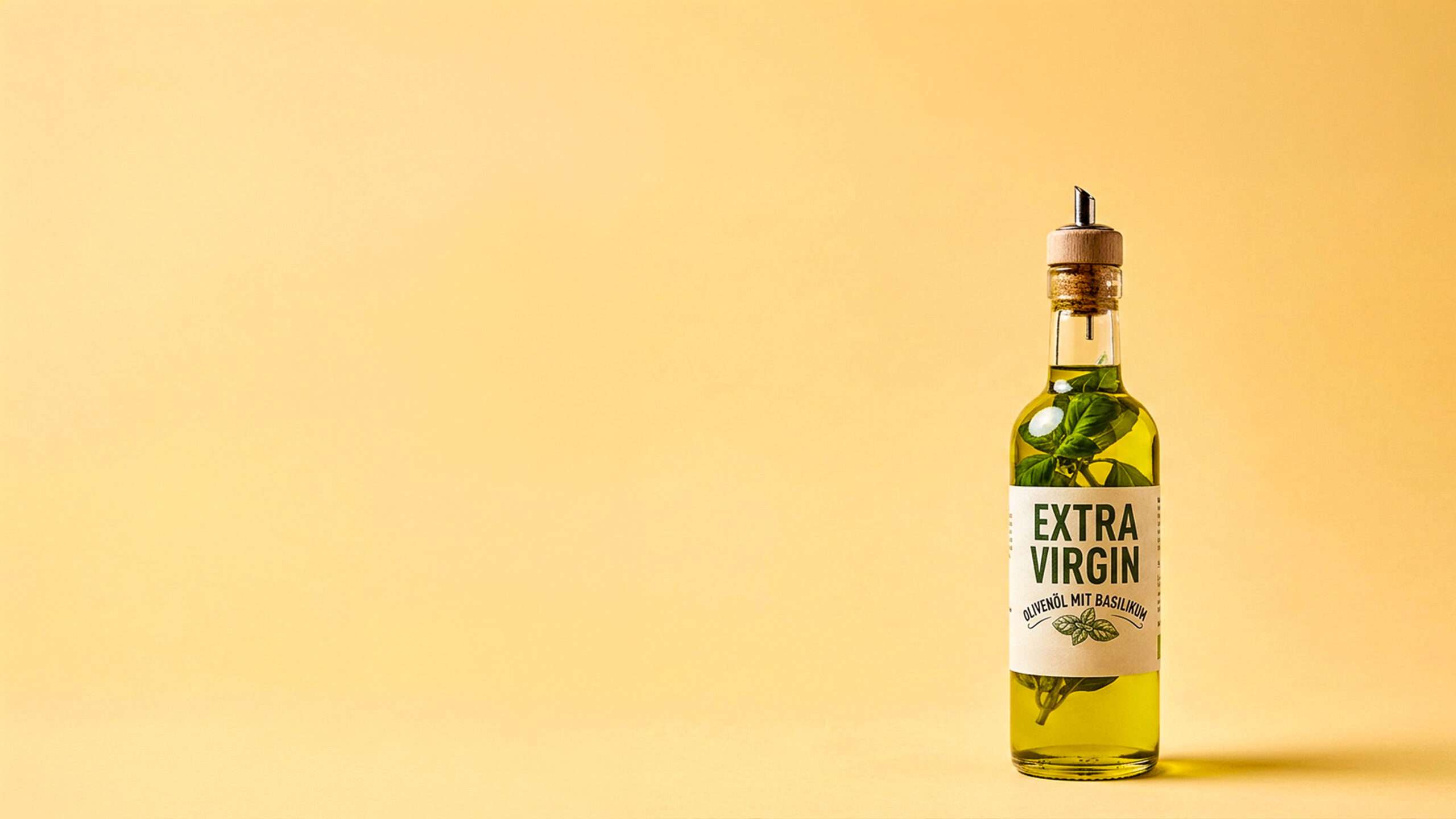
Example: “EcoClean”, “GreenFresh”.
Trademark protection does not protect against scrutiny under consumer protection law. If the name suggests an environmental benefit, it must either be accurate, clearly explained or omitted.
When is an environmental statement “general”?
An environmental statement is general if:
- it is made in writing or orally
- does not contain an explanation
- is not part of a recognized sustainability label.
Typical examples: “environmentally friendly”, “green”, “climate neutral”, “biodegradable”.
General environmental claims are generally prohibited in the future if there is no recognized outstanding environmental performance.
Images and designs that suggest environmental benefits
Green leaves, water, trees or similar motifs can act as an implicit environmental message.
All visual elements must create realistic expectations.
Even a simple symbol can be considered a sustainability label if it acts as a “trust mark”.
Dealing with “climate neutral” & CO₂ claims
Generic statements such as “climate-neutral”, “CO₂-compensated”, “climate-positive” will be prohibited in future, unless the company can demonstrate a recognized top performance.
Statements based on CO₂ compensation outside the company’s own value chain are always prohibited.
Promises for the future (“Net Zero by 2040”) are only permitted with clear, verifiable plans.
What is “recognized environmental excellence”?
A company may only make general environmental claims if its products:
- the EU Ecolabel,
- an ISO Type I eco-label (e.g. Blue Angel) or
- achieve a top position according to EU law (e.g. top energy efficiency class)
.
Important: The tested performance must match the statement.
What is a “certification system”?
A sustainability label is only permitted if it is based on a genuine certification system – i.e. with clear rules, published criteria, independent control and transparency.
Without such foundations, the use of such labels will be prohibited in future under the EmpCo Directive.
What social aspects are meant?
In addition to environmental aspects, sustainability labels also include social characteristics, such as:
- Working conditions
- Human rights
- fair payment
Such statements must also be clearly documented and understandable.
Ban on “climate neutral” claims through offsetting
Claims that a product is climate-neutral, reduced or positive for the climate because emissions are offset elsewhere will be prohibited in future.
Only genuine improvements in a product’s own life cycle may be advertised.
Prohibition of meaningless advertising claims (“irrelevant benefits”)
Advertising claims that are true but offer no added value are inadmissible.
Examples:
- “Gluten-free water” (is always gluten-free)
- “Paper without plastic” (is the normal standard)
What is important is whether this could lead consumers to believe that the product is special or better – even though it is not.
Requirements for future promises (Net-Zero etc.)
Companies may only advertise future environmental targets if they:
- have detailed, realistic plans with timescales,
- make clear, objective and verifiable commitments,
- regularly audited by an independent specialist body,
- make these results publicly available.
Comparison methods in comparison tools
Anyone comparing products (e.g. according to reparability, environmental performance or social criteria) must explain the method clearly so that an average consumer understands it.
Unclear or incomplete information may constitute anti-competitive misleading information.
Can you still use “organic” or “bio”?
Yes, but only within the framework of the existing EU organic rules.
The term is not a free environmental claim, but is strictly regulated.
It is therefore not considered a general environmental claim as long as the organic rules are complied with.
Are “vegan”/”vegetarian” sustainability labels?
No – these terms refer to ingredients, not to environmental or social benefits.
They are therefore not sustainability labels in the sense of the EmpCo Directive.
However, if they are used as environmental proof, this can be misleading.
Application of legal obligations as a special feature
Companies may not present legally prescribed properties as if they were a special advantage.
Example: “Our clothing is free of banned chemicals” – this is a duty, not a bonus.
Can sustainability labels from non-EU countries be used?
Only if they are based on a certification system.
Purely state seals from third countries are not automatically considered permitted.
The legislator clearly refers to EU authorities.
Application of the rules to existing products
From 27.09.2026, all products, including those already produced, must comply with the new rules.
Non-compliant statements must be removed, pasted over or corrected.
Authorities should take appropriate and proportionate action.
The reparability score
The reparability score shows how well a product can be repaired – based on uniform EU standards.
Since 20.06.2025, it has already applied to smartphones and tablets and must be clearly displayed.
Other product groups will follow.
What information must retailers provide on durability and repairability?
Dealers only have to pass on the information that the manufacturer makes available to them, e.g:
- Repairability
- Available spare parts & costs
- Duration of software updates
- Shelf life guarantees
Retailers do not have to do their own research. The information only needs to be clear and clearly visible.
Ratio: Note on the legal guarantee & durability label
There will be two labels in future:
- Mandatory information on the legal guarantee (for all products, always visible)
- Voluntary shelf life label if manufacturers give a shelf life guarantee of more than two years
Both should complement each other and offer the consumer clarity. The best before date label must be displayed directly on the product.
Conclusion
The EU Commission’s FAQs provide a little clarity with regard to the EmpCo Directive and its implementation in competition law. As expected, the Commission understands environmental statements very broadly.
Time is now pressing for companies, because if not only the individual texts, but the entire marketing, including the product presentation, may have to be changed and registered trademarks may also have to be reviewed, there is not much time left until 27.09.2026.
We are happy to
You are welcome to
EmpCo guideline!