


Danger for
trademark without
Consent.
Danger for
trademark without
Consent.
from
When is a trademark deemed to be tolerated – and when is it not? And why does EU law require more than mere silence or cooperation in the case of consent?
Danger vs. Danger
The Judgment of the General Court of the European Union of 22.10.2025 – Ref. T-482/24 shows impressively how strictly European trademark law deals with alleged agreements. The proceedings centered on the sign “Danger”, reproduced below, which was registered for sports and martial arts articles. This was applied for in November 2021 and registered in July 2022.
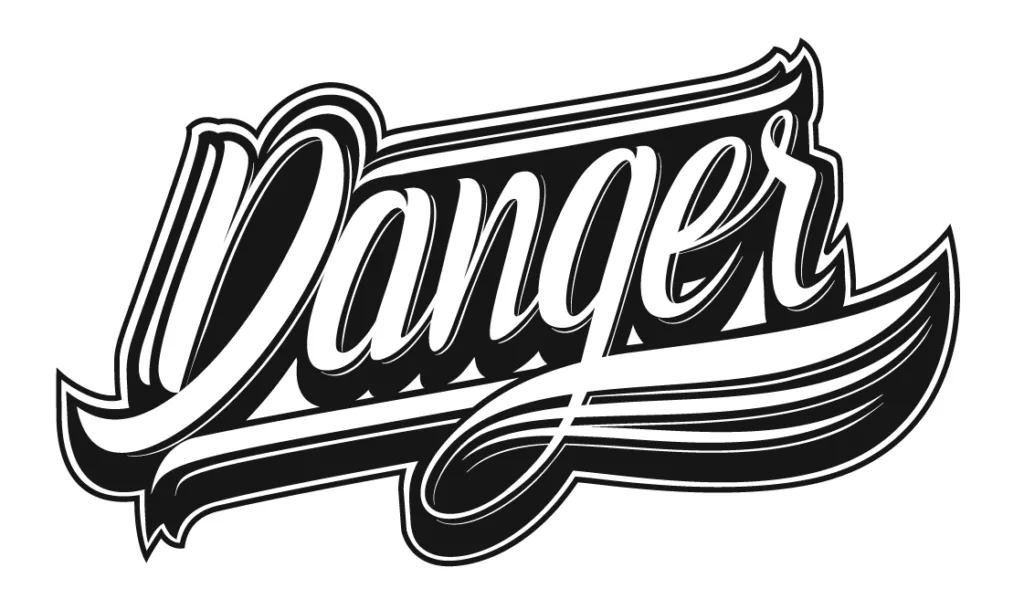
It was opposed by an older, identical Spanish trademark that had already obtained protection for the same goods at the beginning of 2021.
The owner of the earlier Spanish trademark applied for the cancellation of the later EU trademark. The EUIPO trademark office granted the application. The proprietor of the EU trade mark appealed against this – but without success.
Consent to registration?
The case was clear at first glance. Two identical signs, registered for identical goods, facing each other. In such a constellation, the older trademark always takes precedence and the younger one would have to be deleted.
The owner of the later trademark did not seriously deny this, but argued that the owner of the earlier trademark had de facto consented to the registration of the EU trademark.
In the opinion of the proprietor of the later EU trade mark, this consent arose from the circumstances. The owner of the earlier trademark had known about the application, had been involved in the processes or at least had not prevented the trademark registration. From this, she deduced that he could no longer rely on his earlier trademark later.
The court did not follow this reasoning. It made it clear that EU trademark law places very specific requirements on consent. It was not decisive whether someone was involved, was informed or did not react immediately. The only decisive factor was whether a clear consent to the specific trademark application had been declared.
Silence is not consent
According to the court, consent must be unambiguous and express. It may not be inferred from conduct, business relationships or tacit acquiescence. Anyone claiming consent must be able to prove it.
In the present case, such evidence was completely missing. Neither from the documents submitted nor from subsequent agreements was there a declaration by the proprietor of the earlier word/figurative mark that he agreed to the registration of the later EU trade mark.
No protection through “contradictory behavior”
The attempt to present the actions of the owner of the earlier trademark as contradictory was also unsuccessful. The court admitted that EU law generally disapproves of contradictory behavior. However, this idea could not lead to a softening of the clear requirements for effective consent. Otherwise, any informal involvement or waiting would be sufficient to undermine the protection of an earlier trademark.
The court consequently dismissed the action in its entirety and confirmed the declaration of invalidity of the later EU trademark “Danger”.
Conclusion
It must be conceded that the proprietor of the later EU trade mark chose a very creative approach here. However, this was doomed to failure, as otherwise older laws could easily be circumvented. For consent or forfeiture, which is regulated by law, more is needed.
Companies that have actually made agreements in connection with a trademark application are well advised to record these in writing – and in such a way that there is no longer any doubt about the content.
We are happy to
advise you about
Trademark law!